A MAGICAL AGORA IN THE DESERT
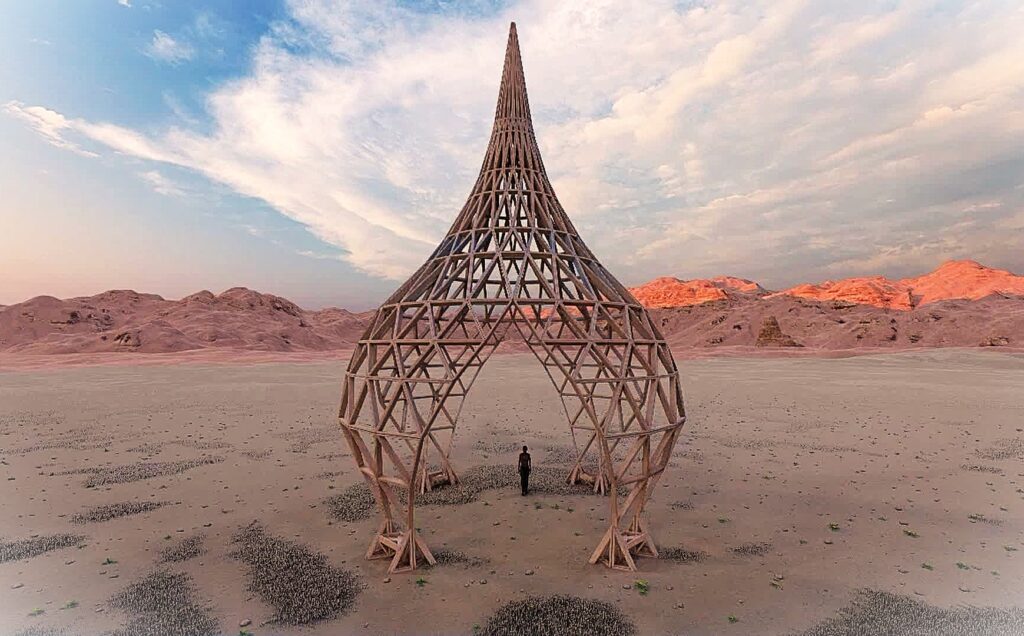
Confronted with the excesses of our contemporary lifestyles, the Midas Tear serves as both an ecological warning and a symbolic call for collective awareness.
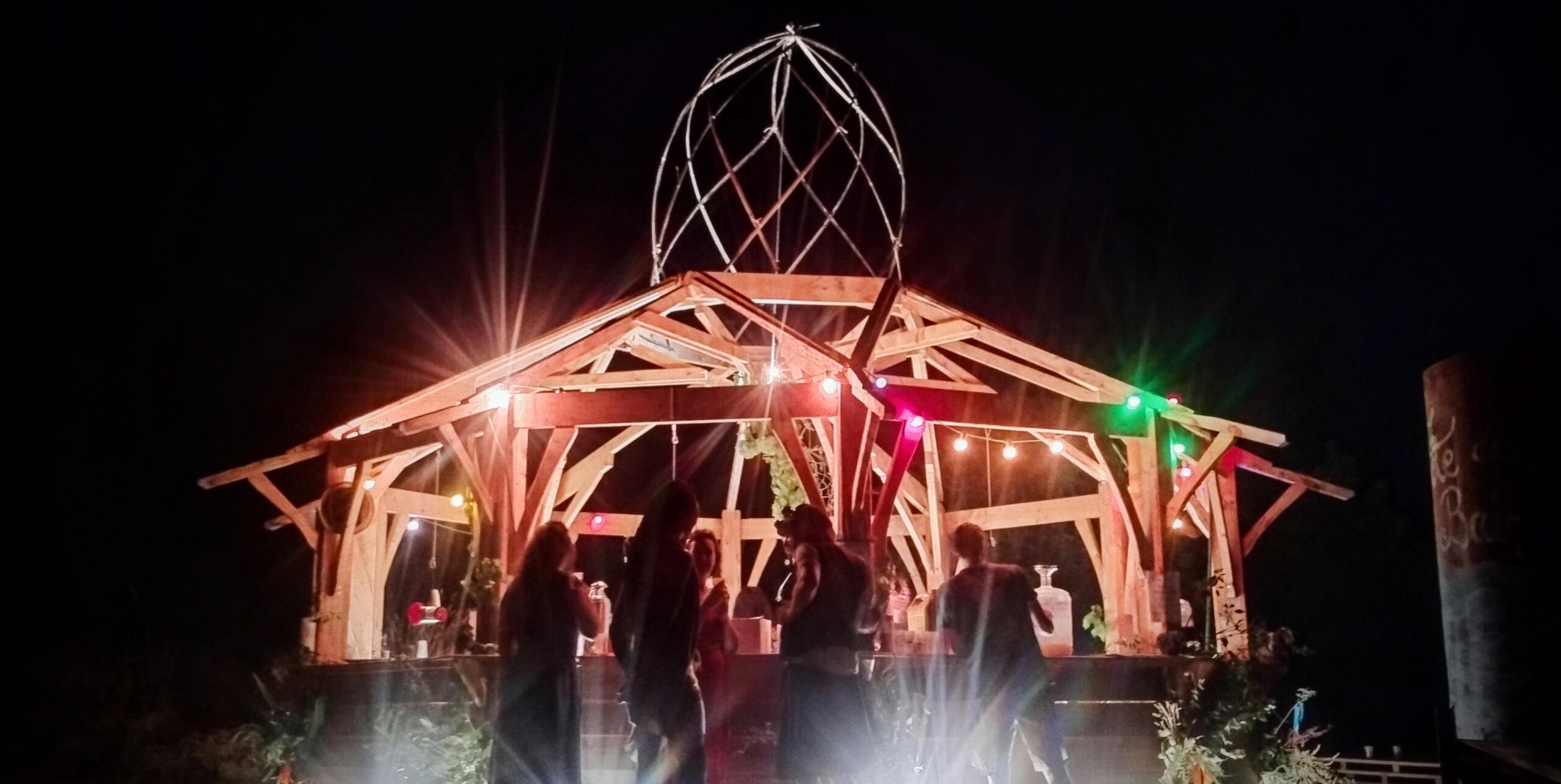
Crafted from wood, this “tear” represents a drop of oxygen—decarbonizing the future while reawakening our imagination. It invites us to reflect on new ways of living and designing, through architecture that harmonizes with and draws inspiration from the natural world.
THE LEAD ARTIST/AUTHOR
ARTIST – DESIGNER – BUILDER
CREATOR OF SYMBIOTIC ART
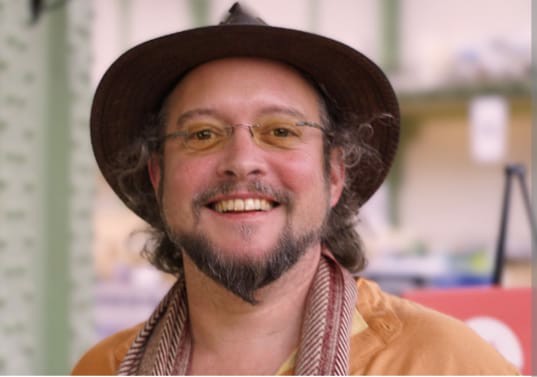
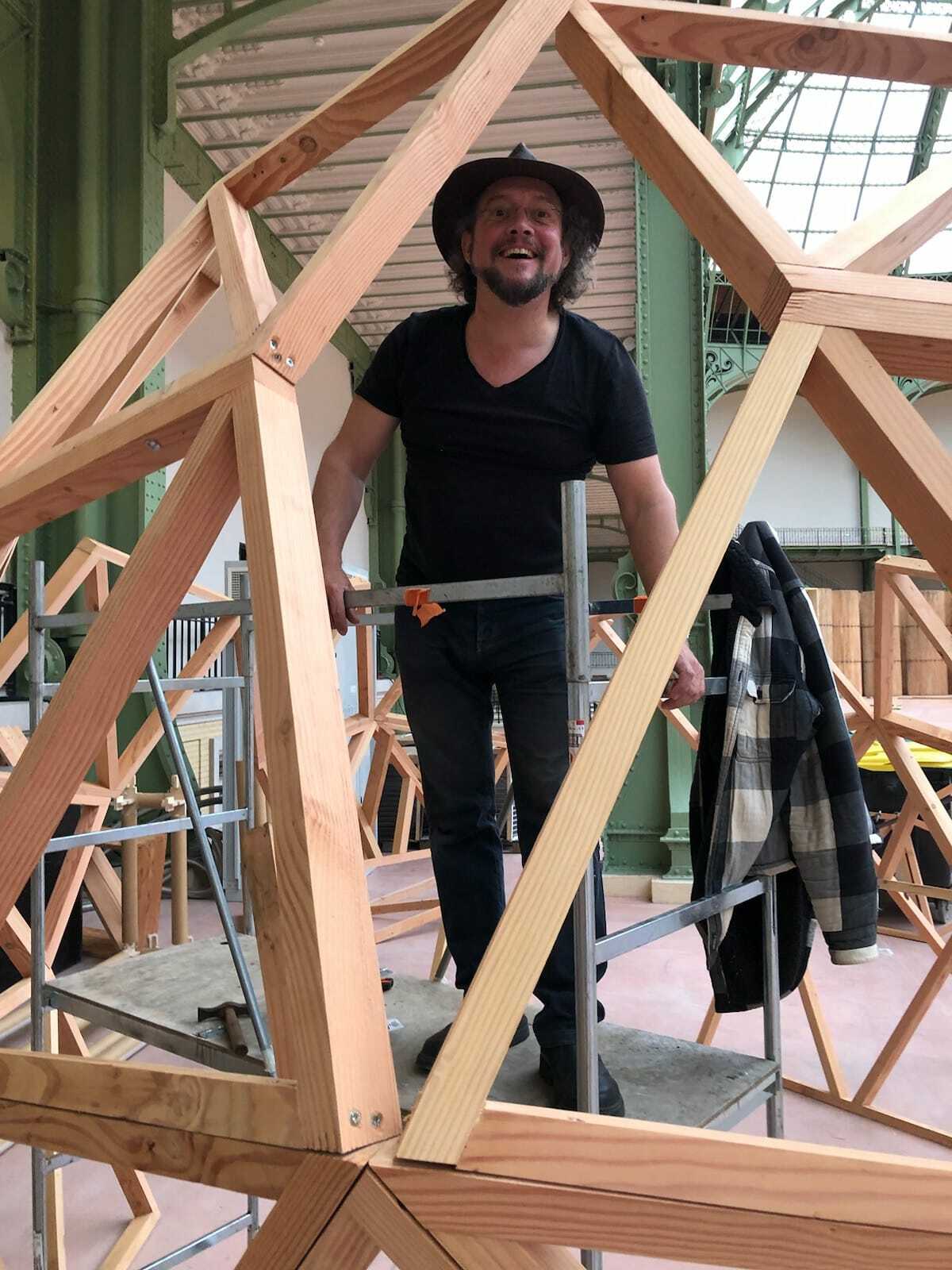
Michael Feneux is a visionary and multidisciplinary artist, designer, and builder whose work merges art, architecture, sacred geometry, and ecological innovation. As the lead artist of the « Tears of Midas » project, he is proposing a monumental 12-meter wooden version of this iconic installation for the 40th anniversary of Burning Man in 2026.
Michael Feneux’s artistic vision is deeply rooted in forests, which he considers archetypal spaces of life, intelligence, and interconnectedness. A leading figure in the European timber industry, he brings together passionate professionals from the forestry and wood sectors.
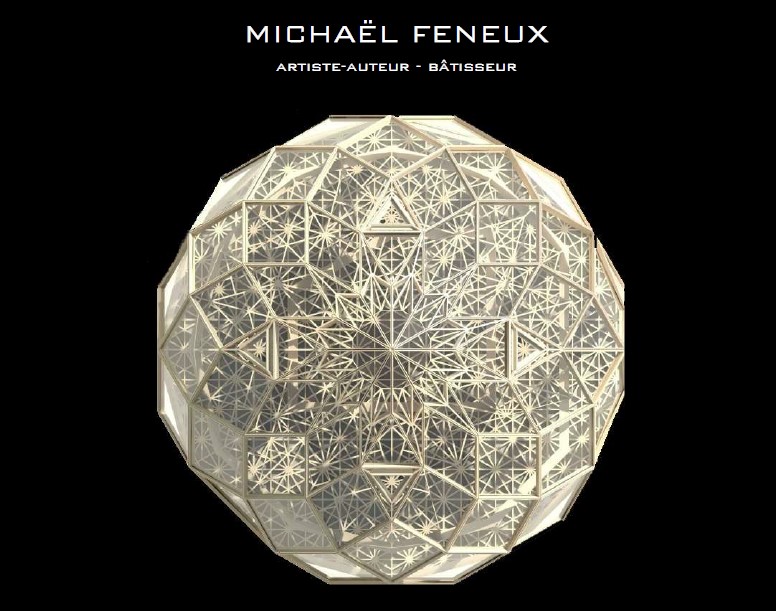
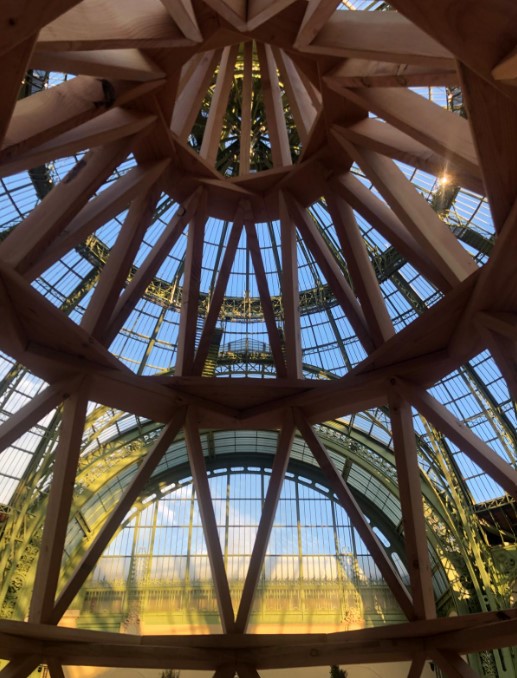
Feneux is a world specialist in the geometry of zomes—and in biomimetic forms inspired by diamonds that echo floral patterns, mandalas, and the hidden geometries of life. He creates large-scale, immersive wooden structures that function simultaneously as sculpture, architecture, and a social ritual space. These structures invite visitors to enter forms evoking a mythical tree, a living sanctuary, and an experience connecting the infinitely large to the infinitely small.
« The Tears of Midas » is conceived as a wooden « drop of oxygen, » symbolizing forests as the lungs of the planet and linking the work to the cycles of air, carbon, light, water, and regeneration.
More than a sculpture, it is an invitation to contemplation, a source of emotional reflection on life, and a reminder of our interdependence with all living beings.
This archetypal parable, conceived by the artist, reinterprets the myth of King Midas as a wake-up call, a warning against reducing nature—and forests in particular—to a mere source of wealth.
It critiques the rampant consumerism and exploitation that are ravaging ecosystems worldwide. Sculpted from living wood, the artwork stands as both a warning and an invitation to a better world: to cherish nature before it is too late, to slow the pace of endless development, and to place life and nature at the heart of human culture. In this sense, The Tears of Midas embodies “awakening,” reminding us that true wealth lies in life itself, in love, beauty, and the contemplation of all forms of life.
The installation also serves as an open-air agora, conducive to meditation, exchange, and sharing. Its vertical chimney, connecting earth and sky, echoes the axis of a tree trunk, transforming the structure into a collective ritual space, like a forest, where participants gather like an ephemeral human canopy in the desert.
Drawing on his international experience managing complex timber constructions in challenging environments, Michaël Feneux combines artistic vision, practical building expertise, and collaborative, low-environmental-impact methods.
His work brings together master carpenters and artist-builders from around the world to create symbolic projects that envision a regenerative social transformation—what he calls “the birth of symbiotic architecture.”
THE TEARS OF MIDAS COLLECTIVE !
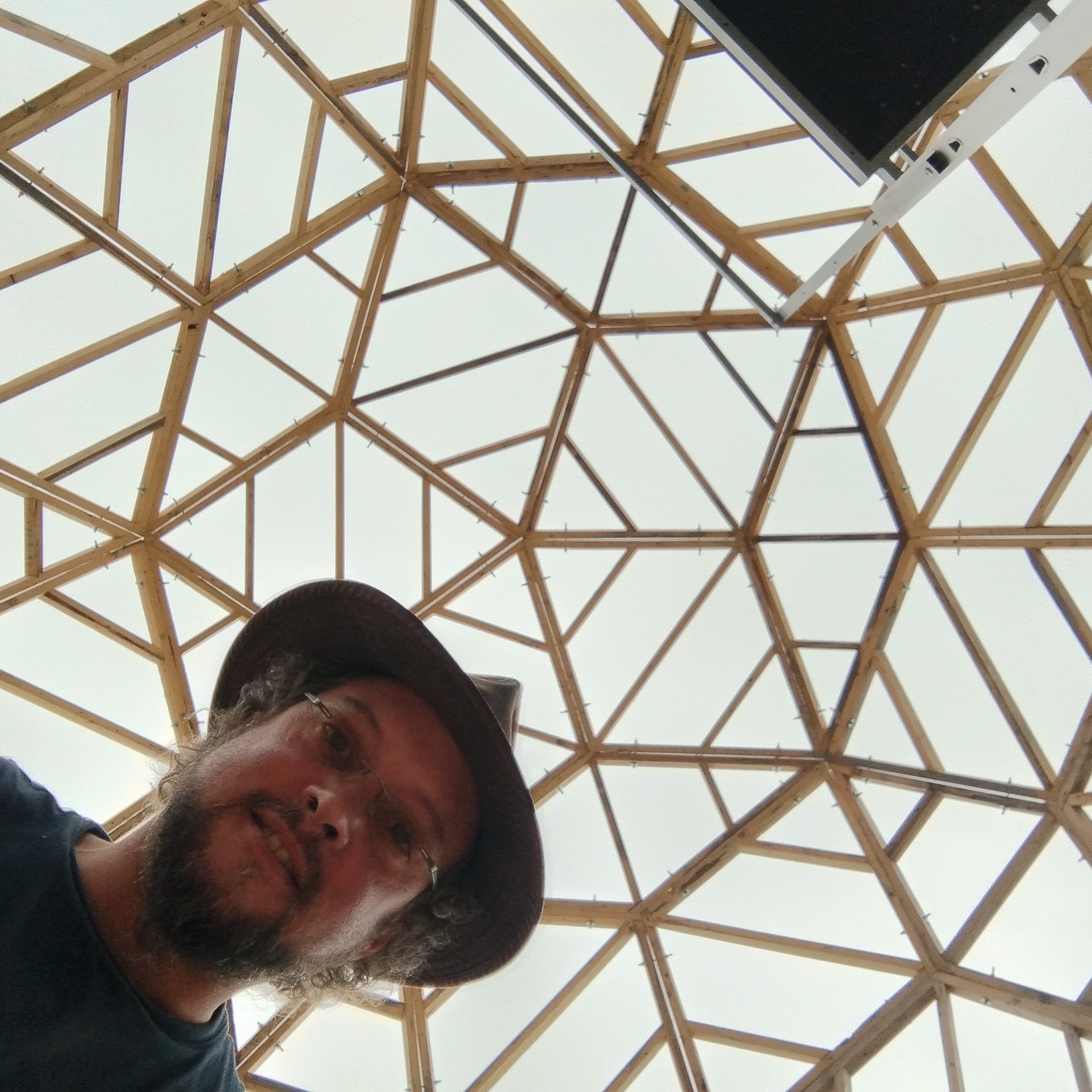
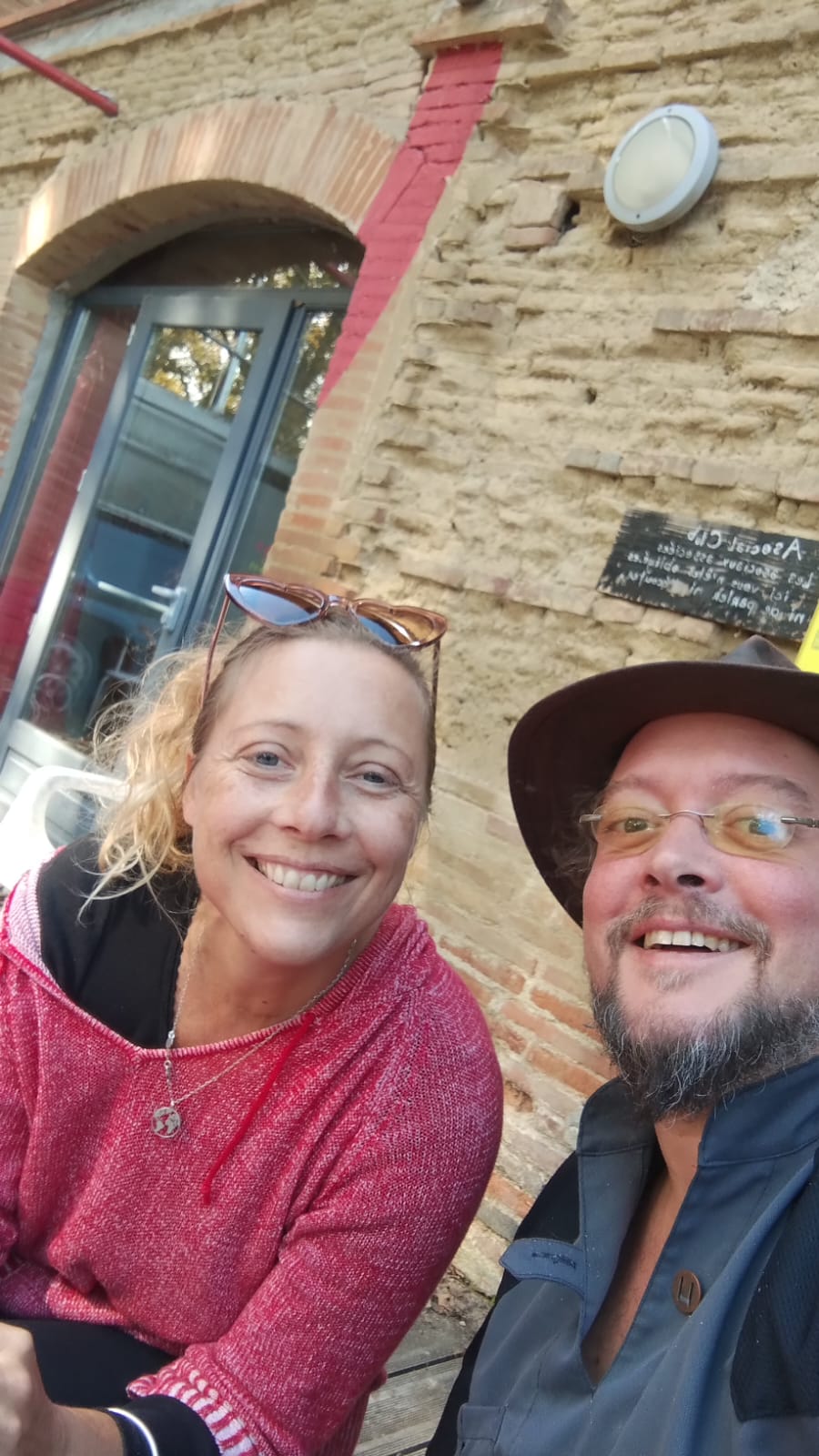
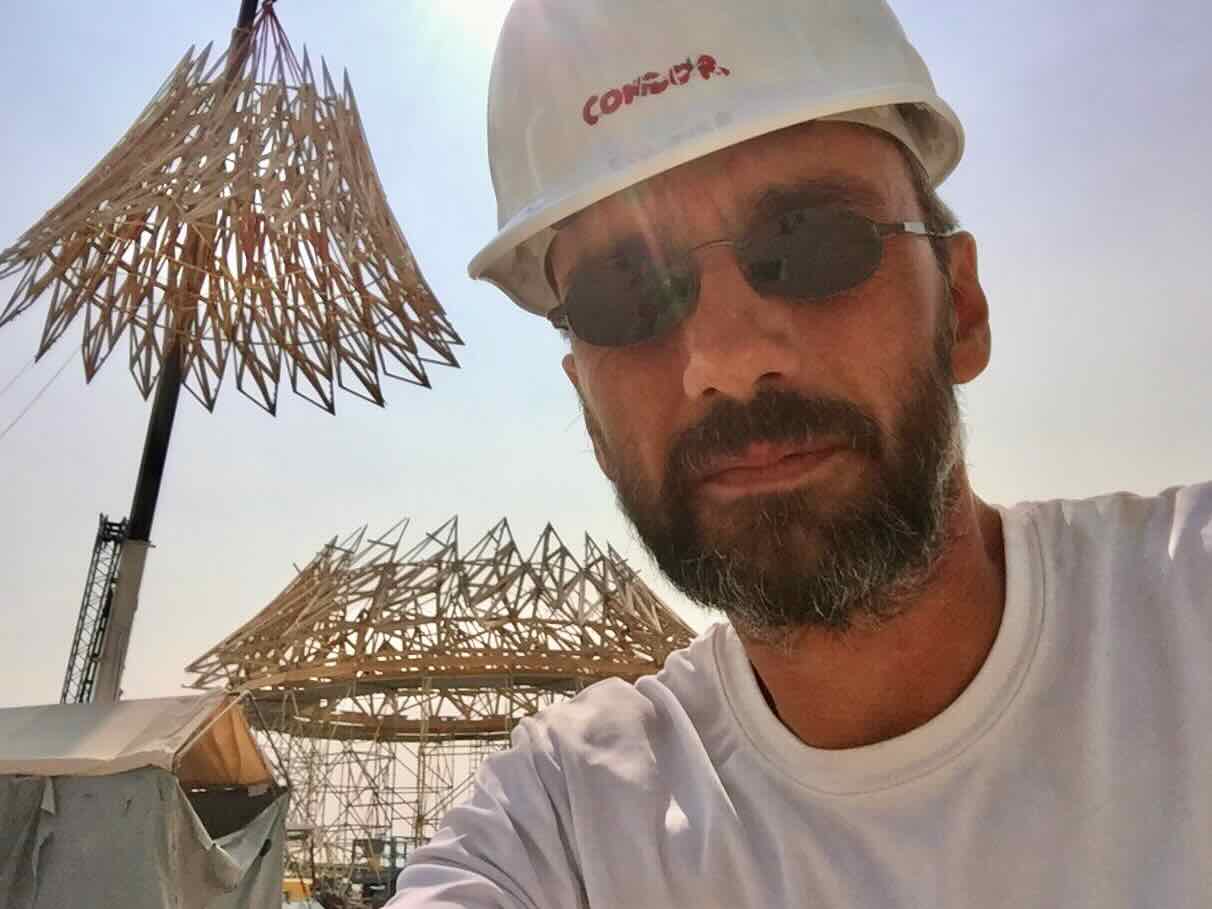
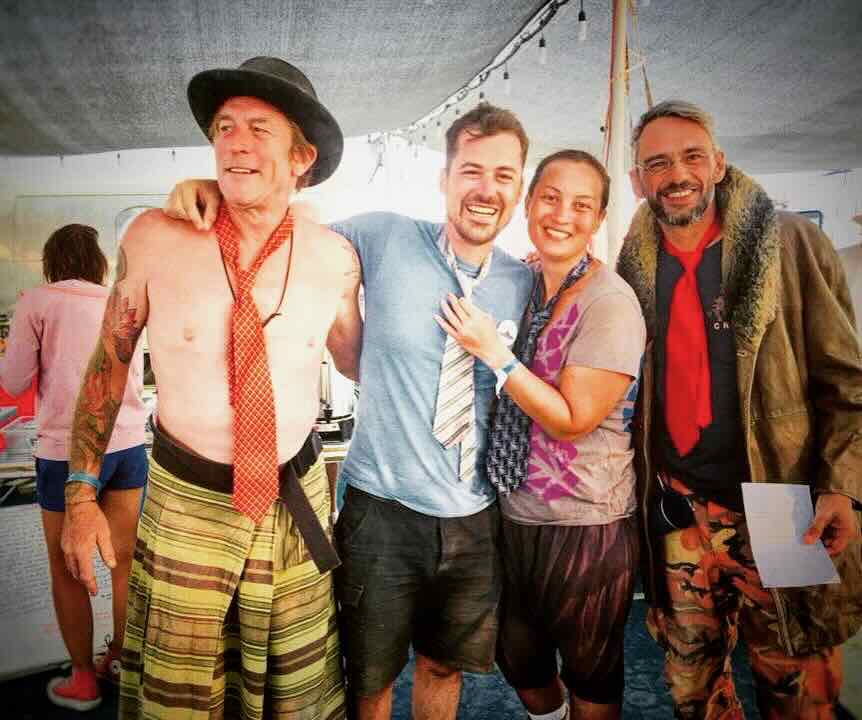
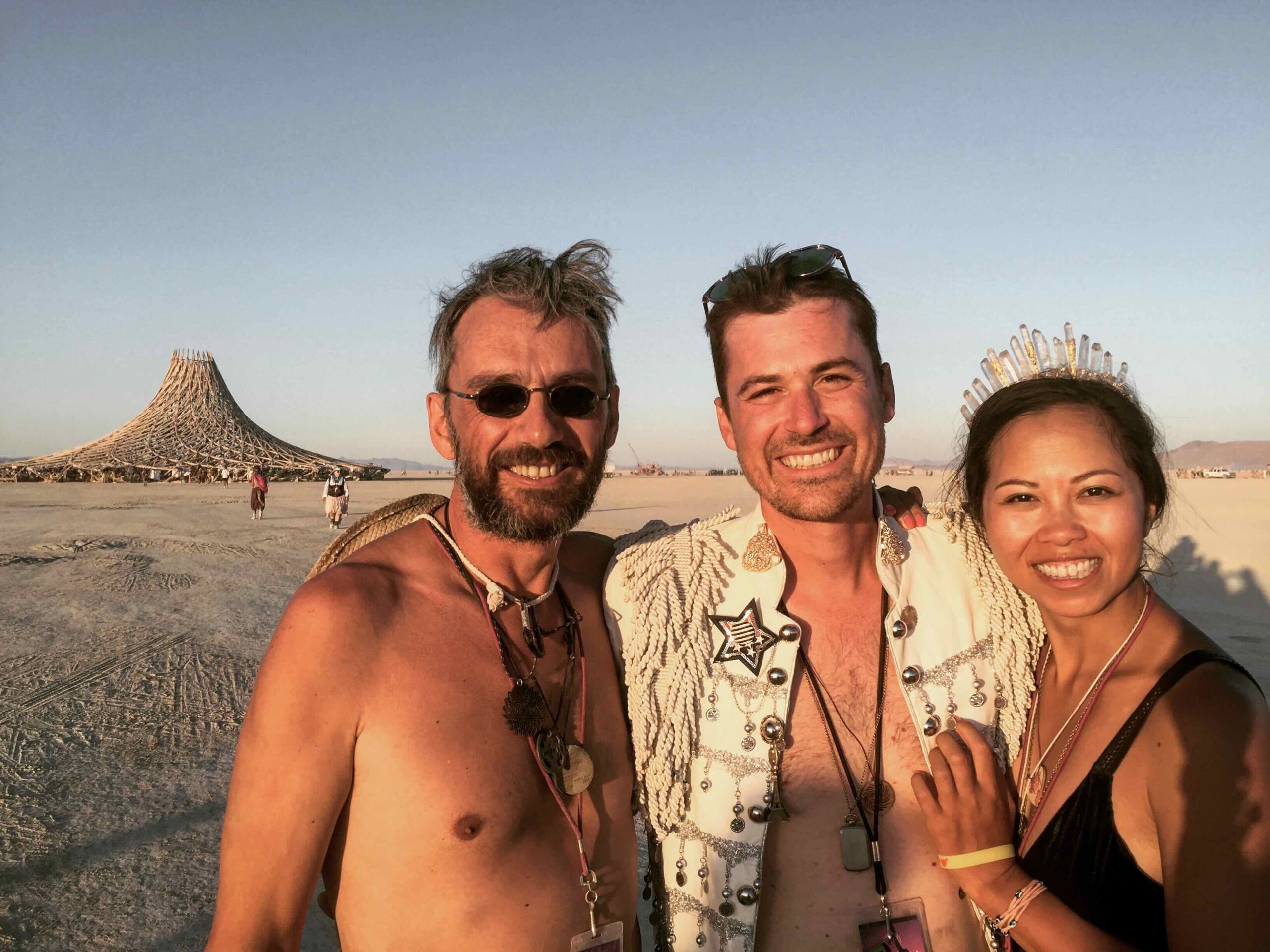

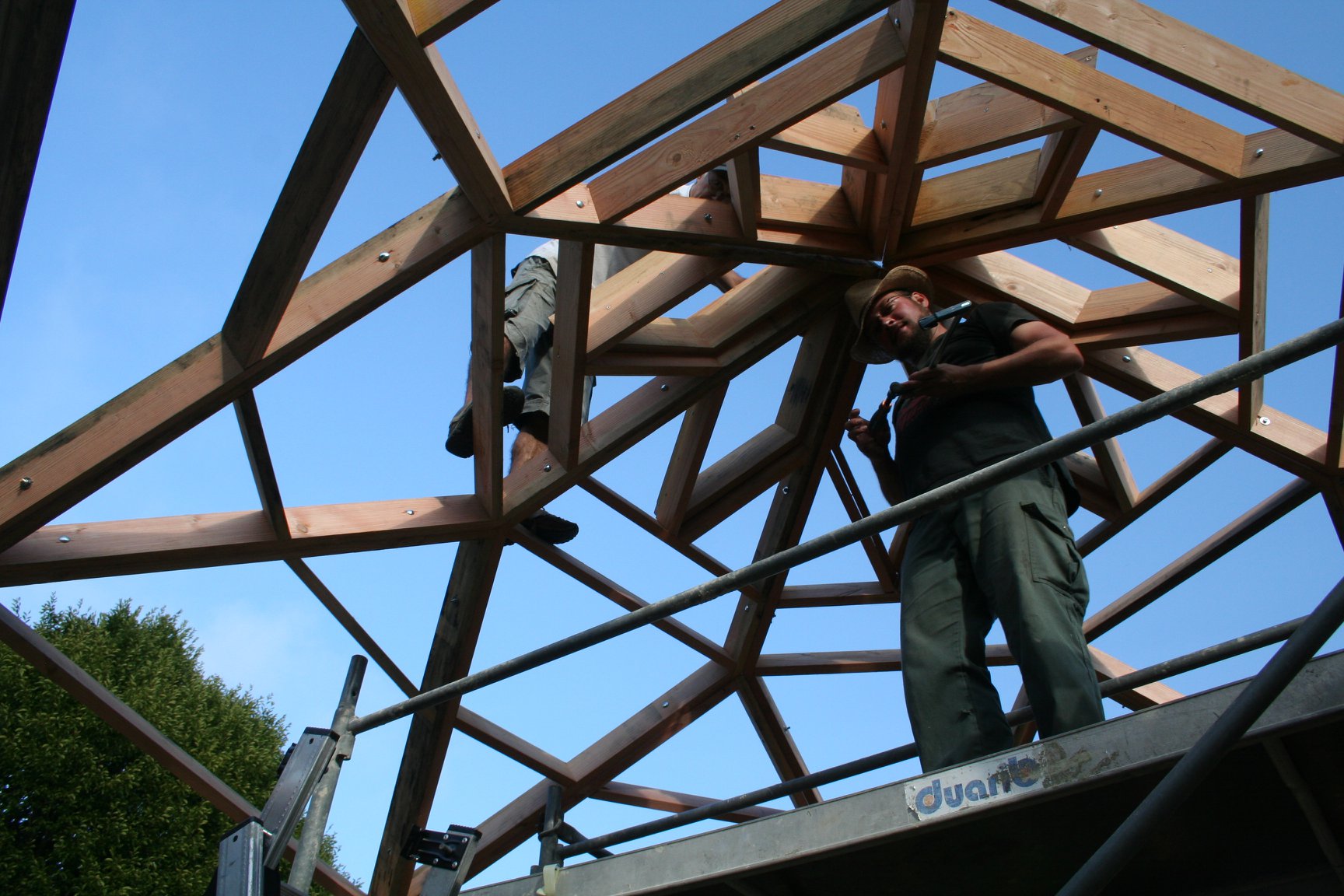
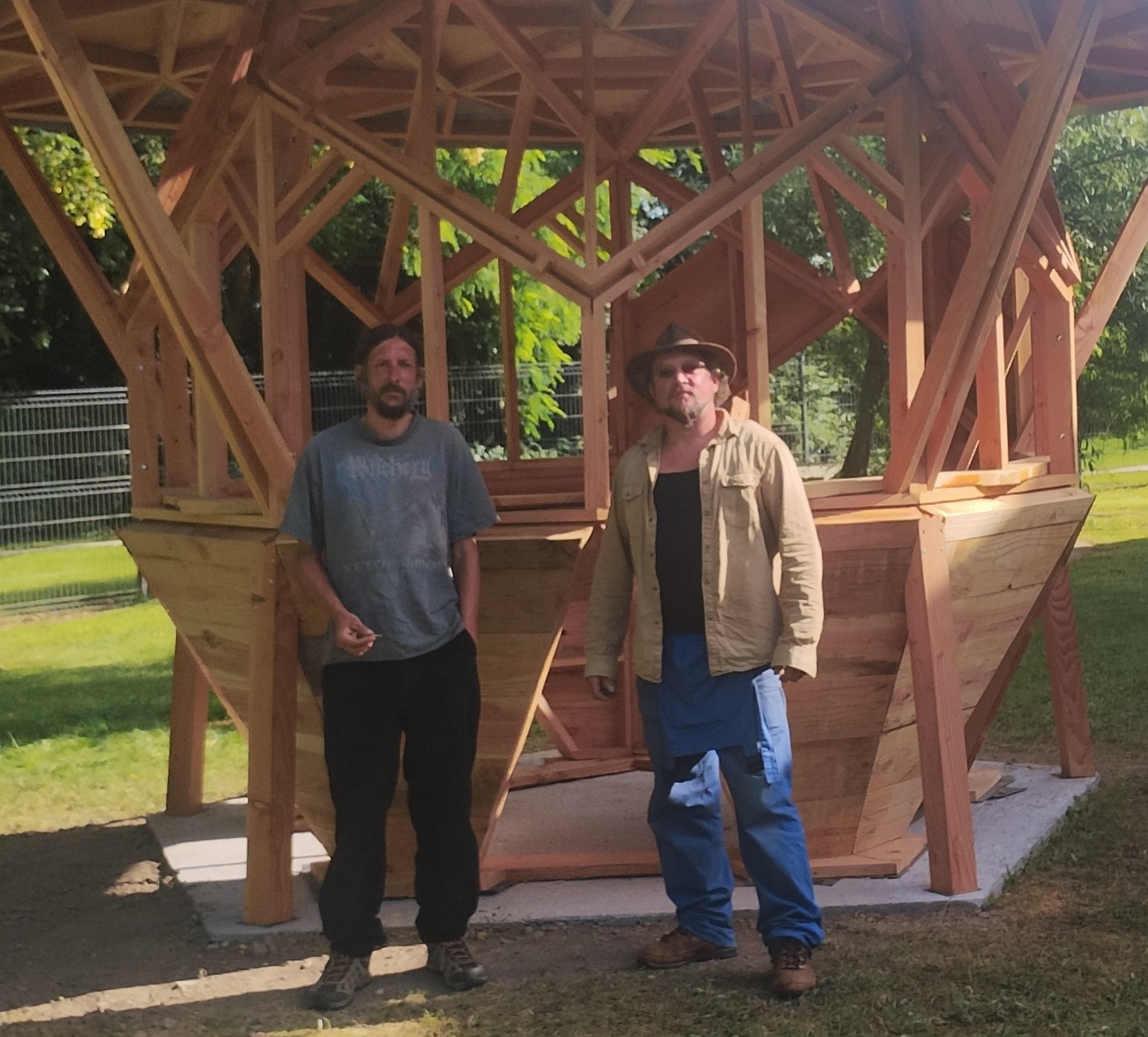
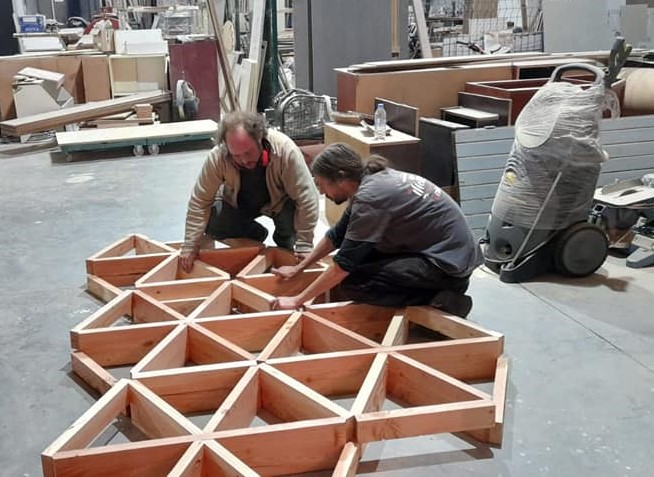

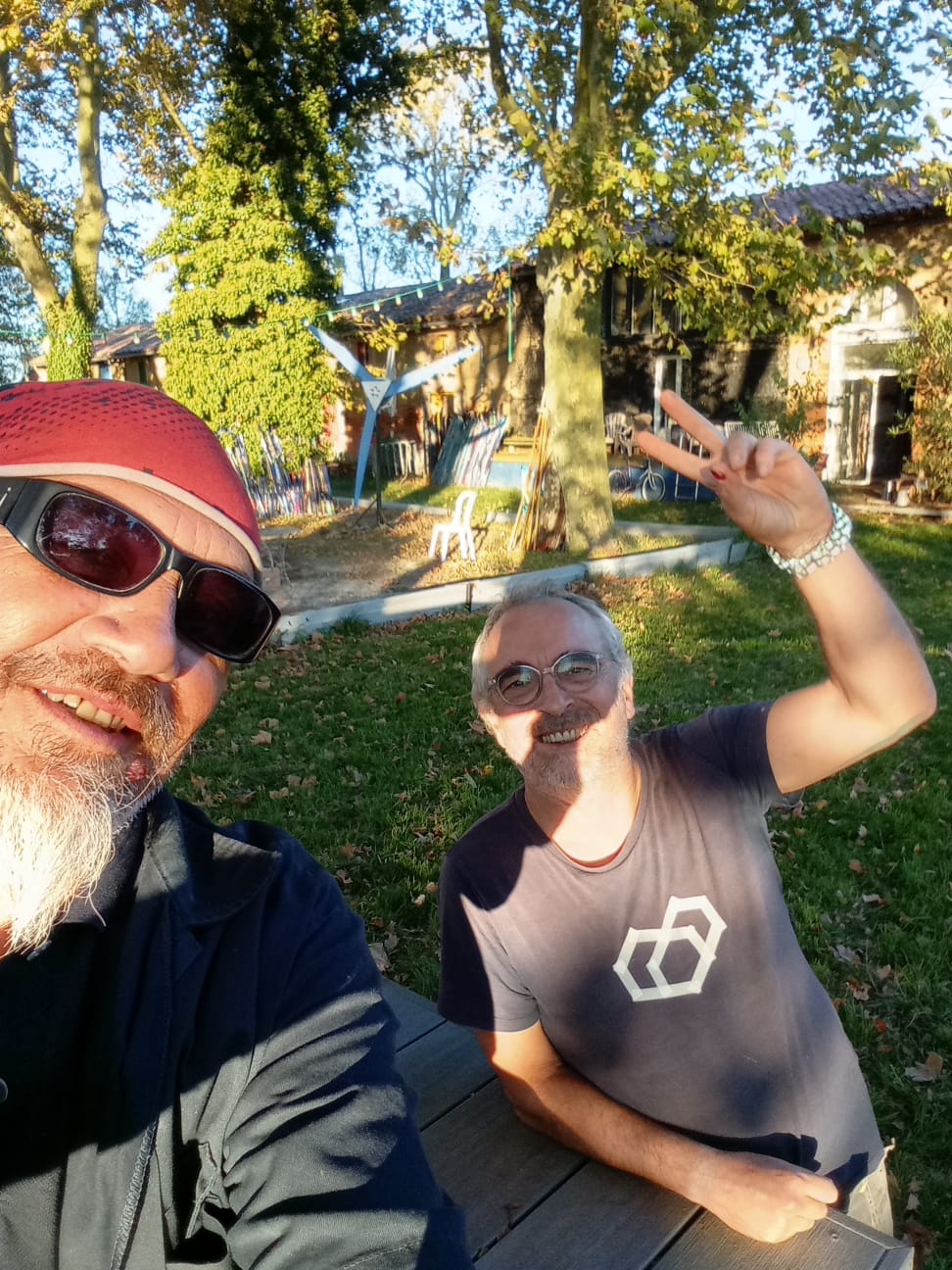

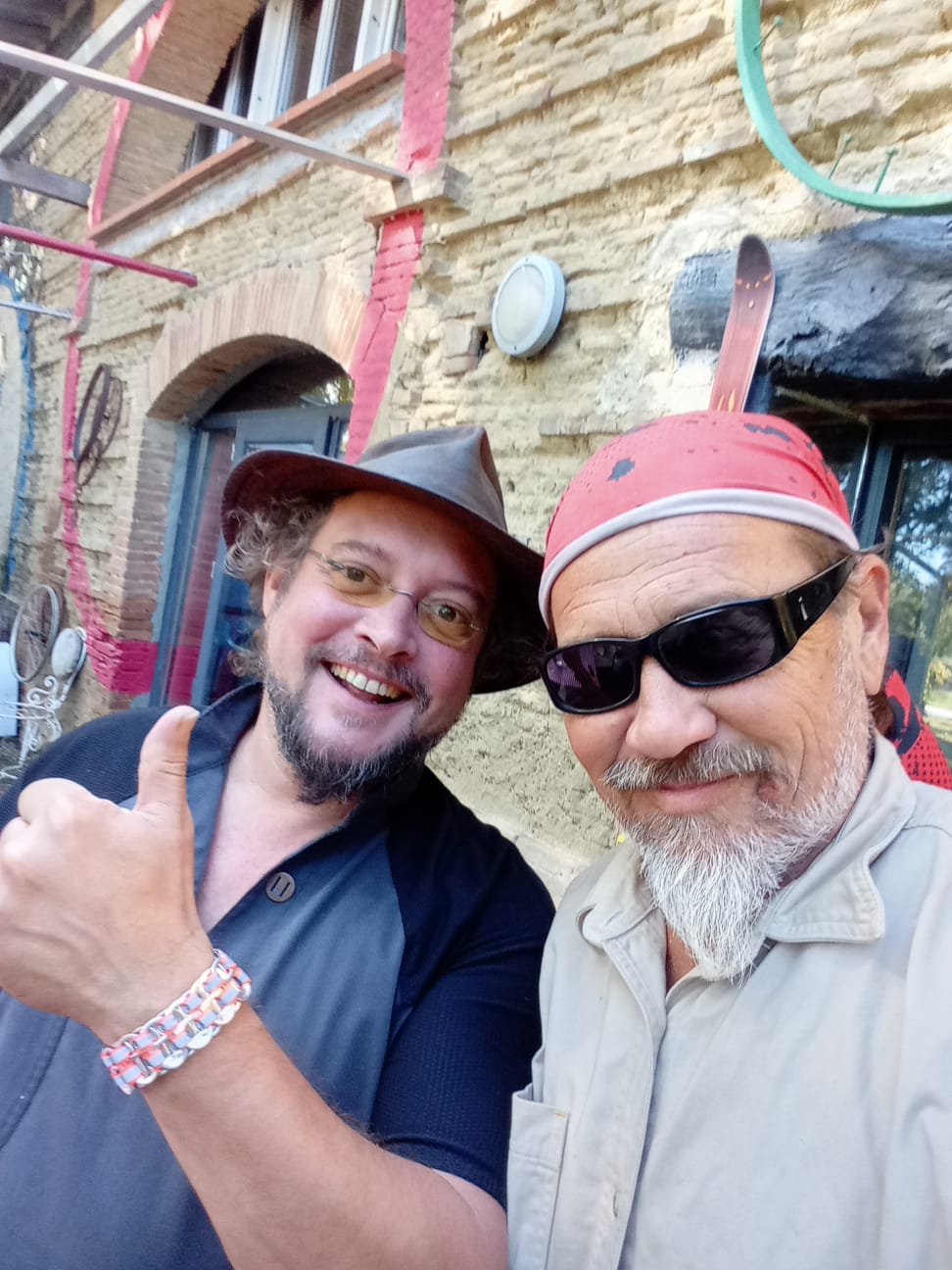
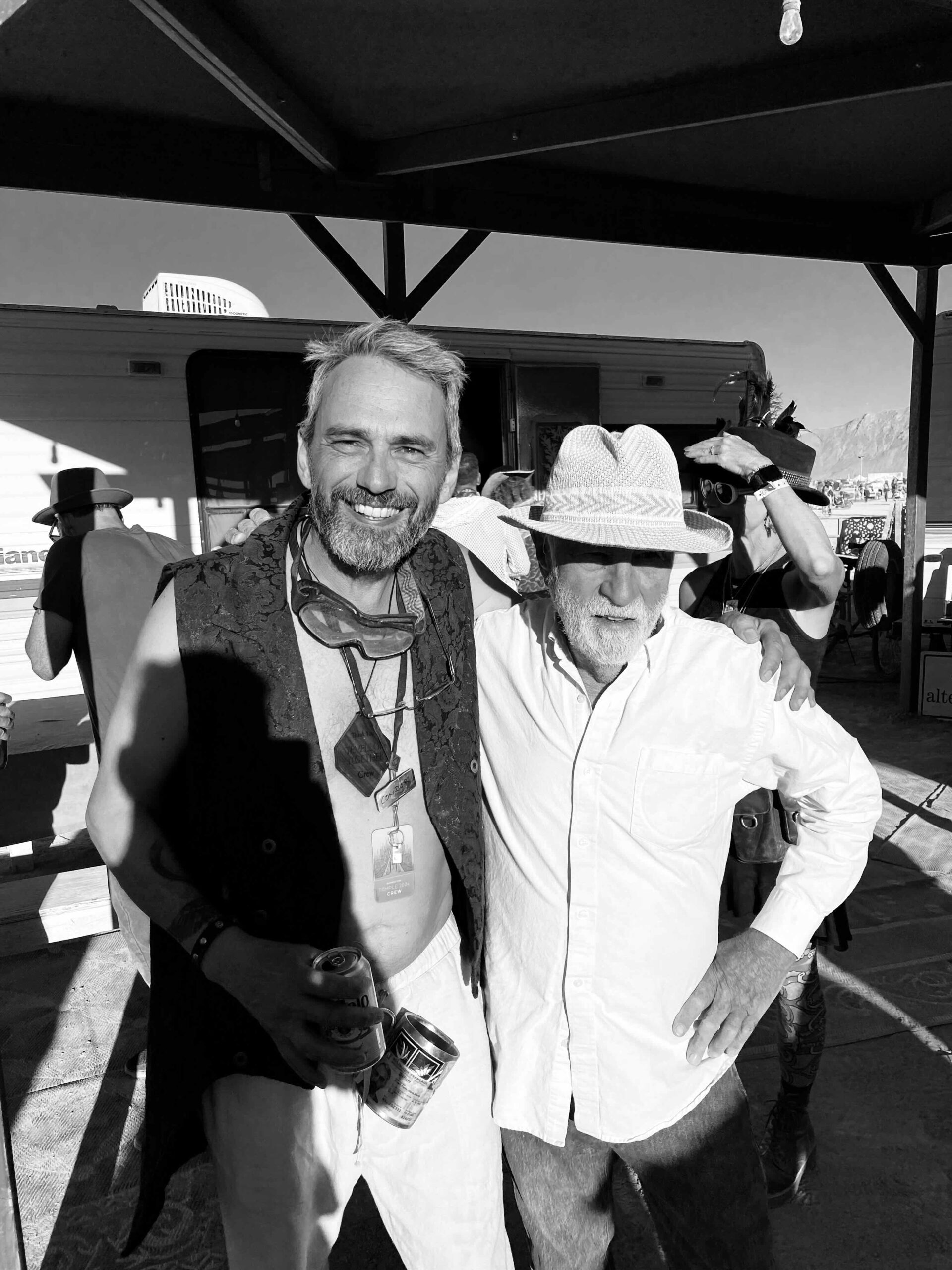
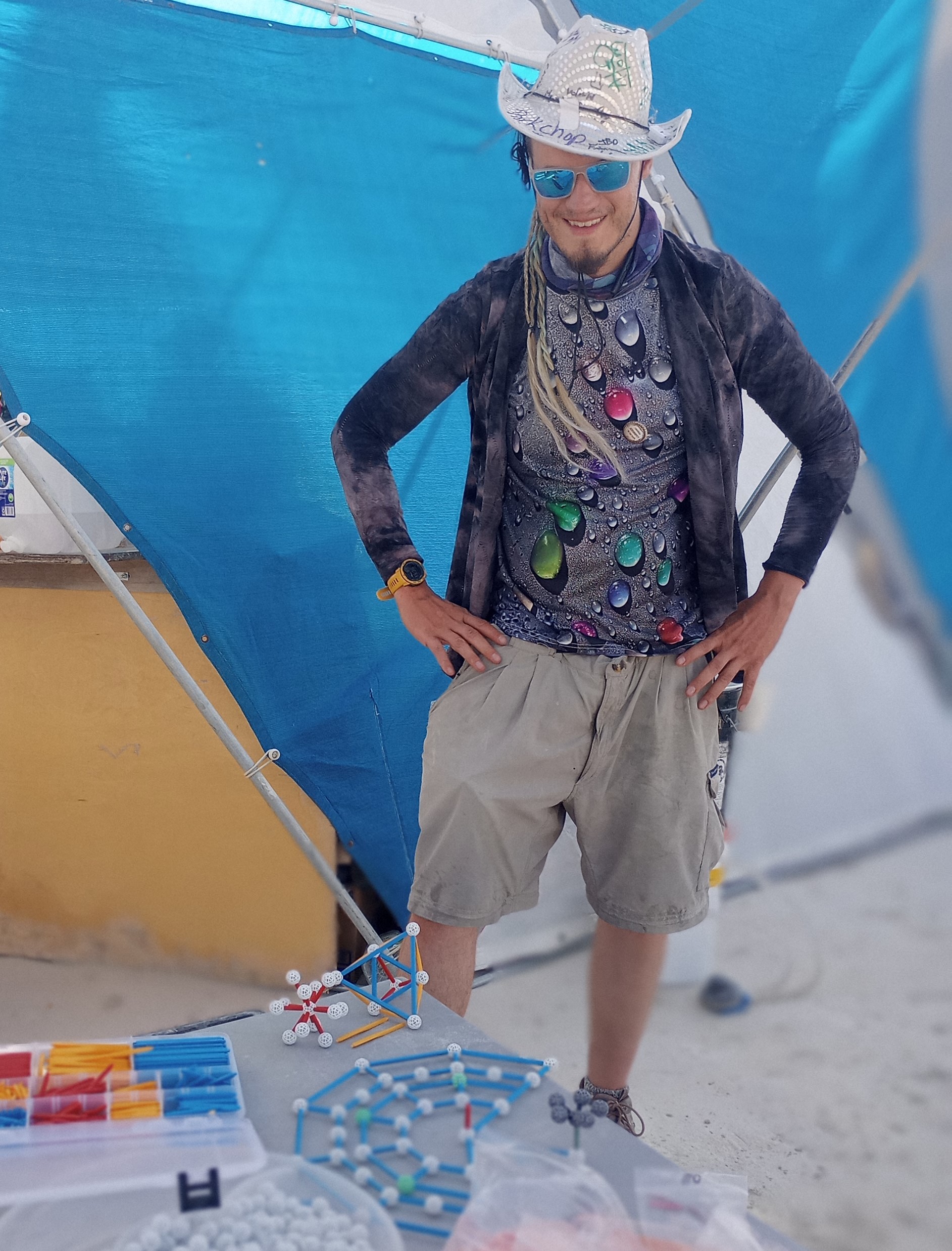
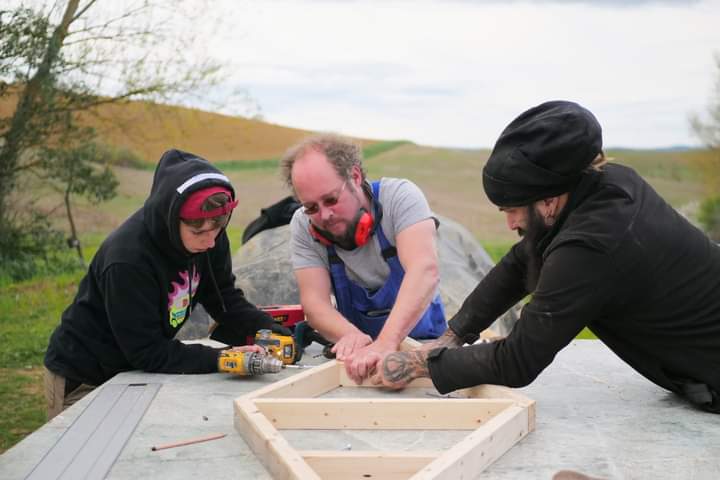
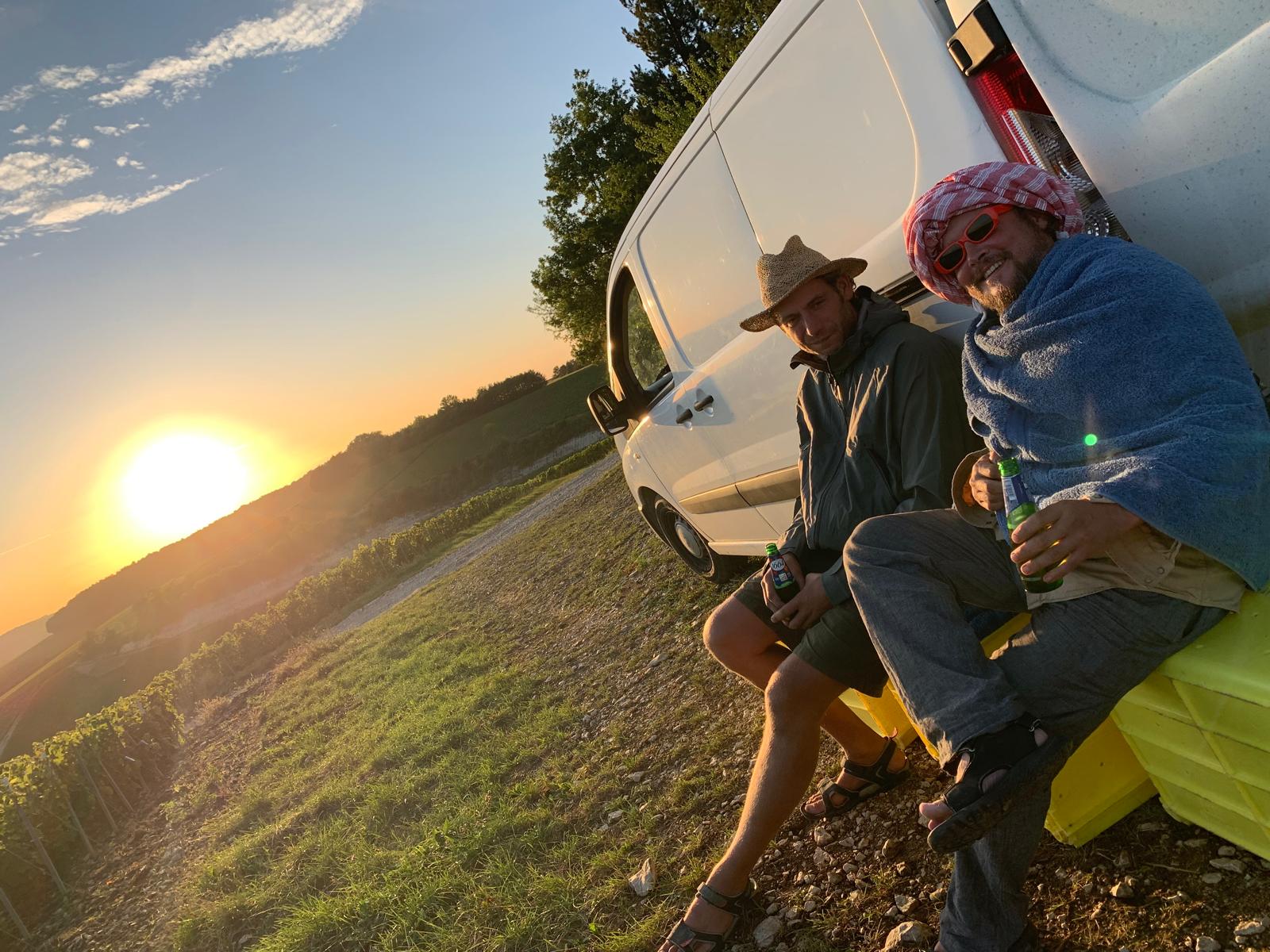
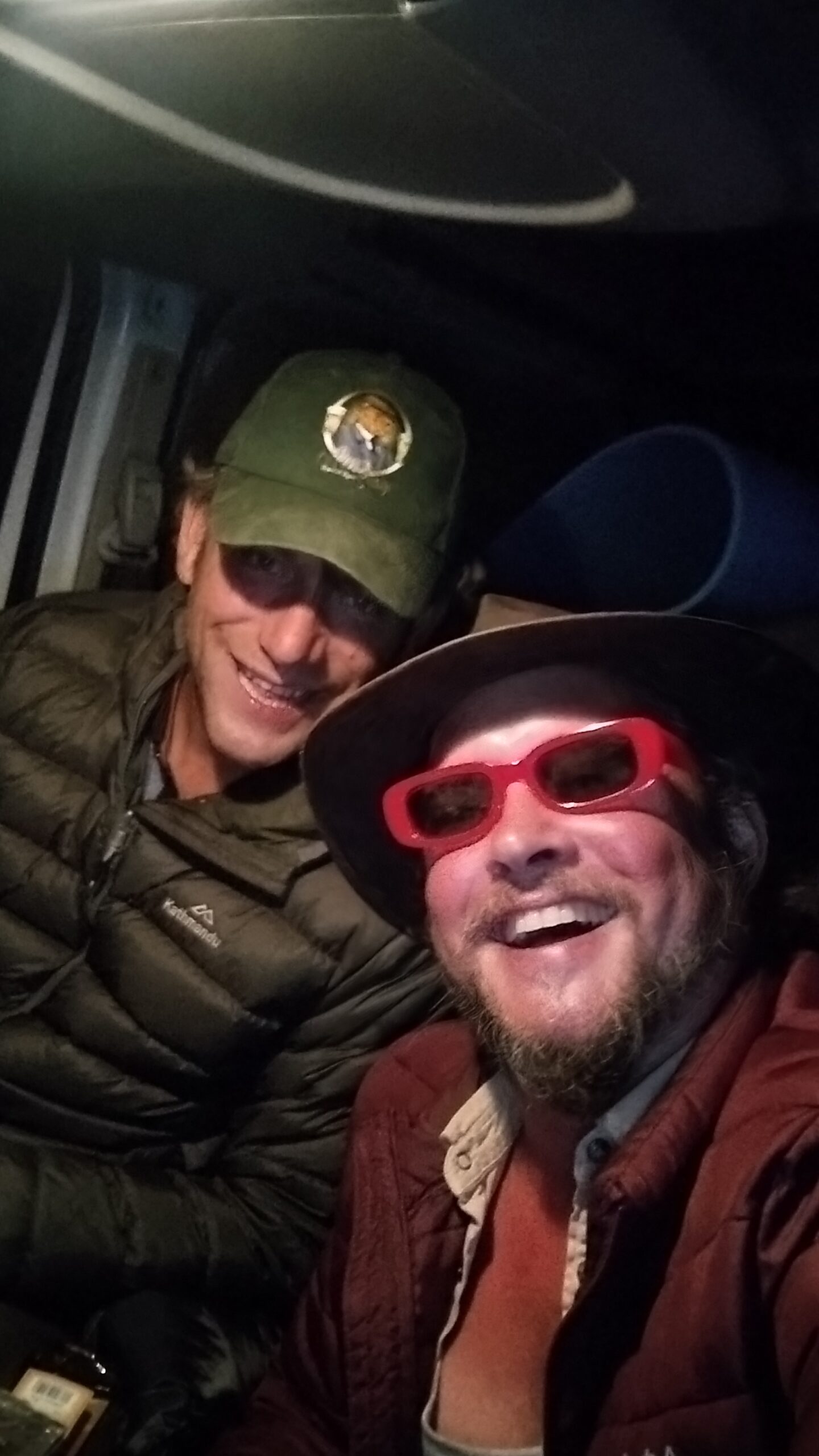
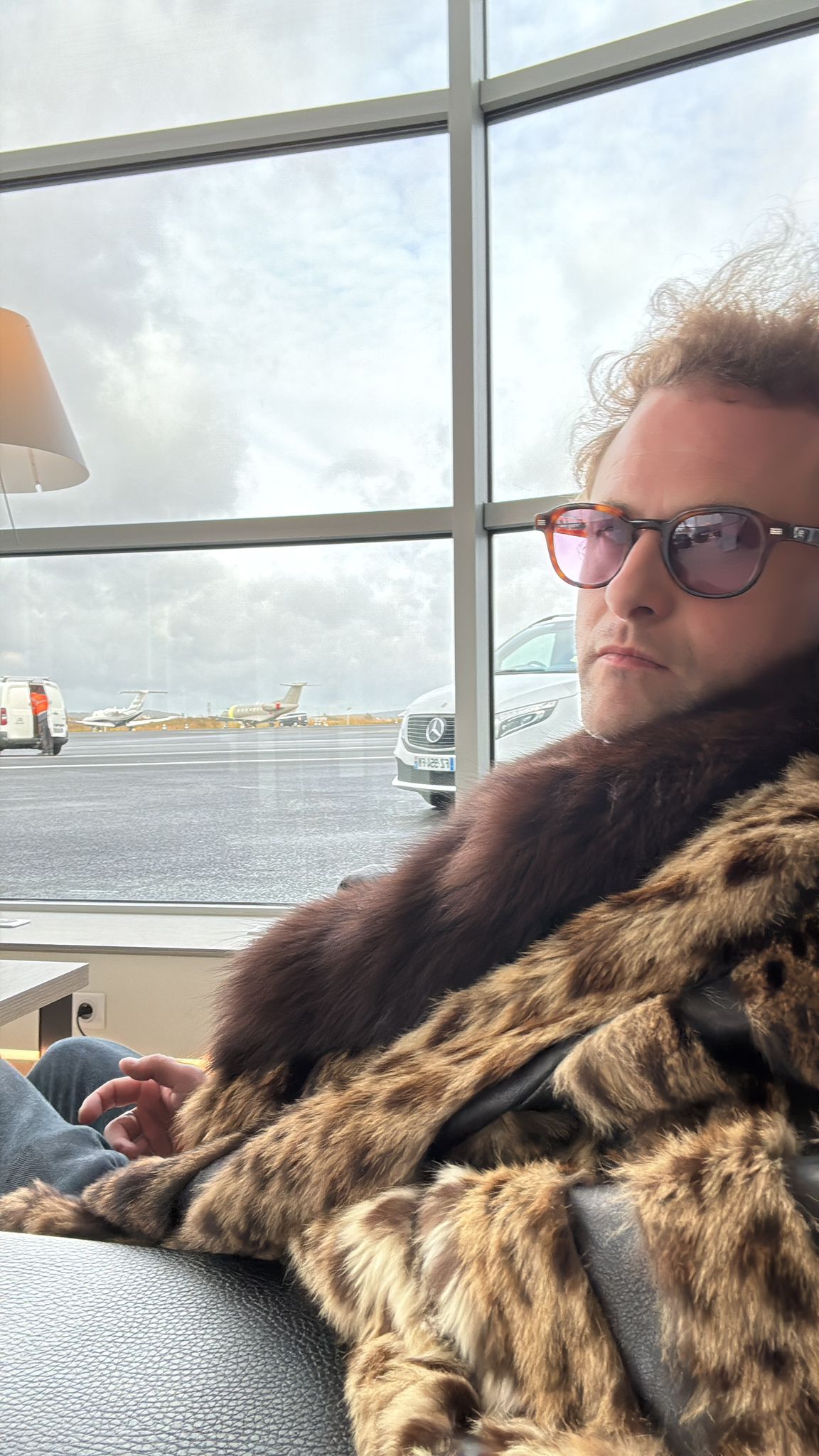
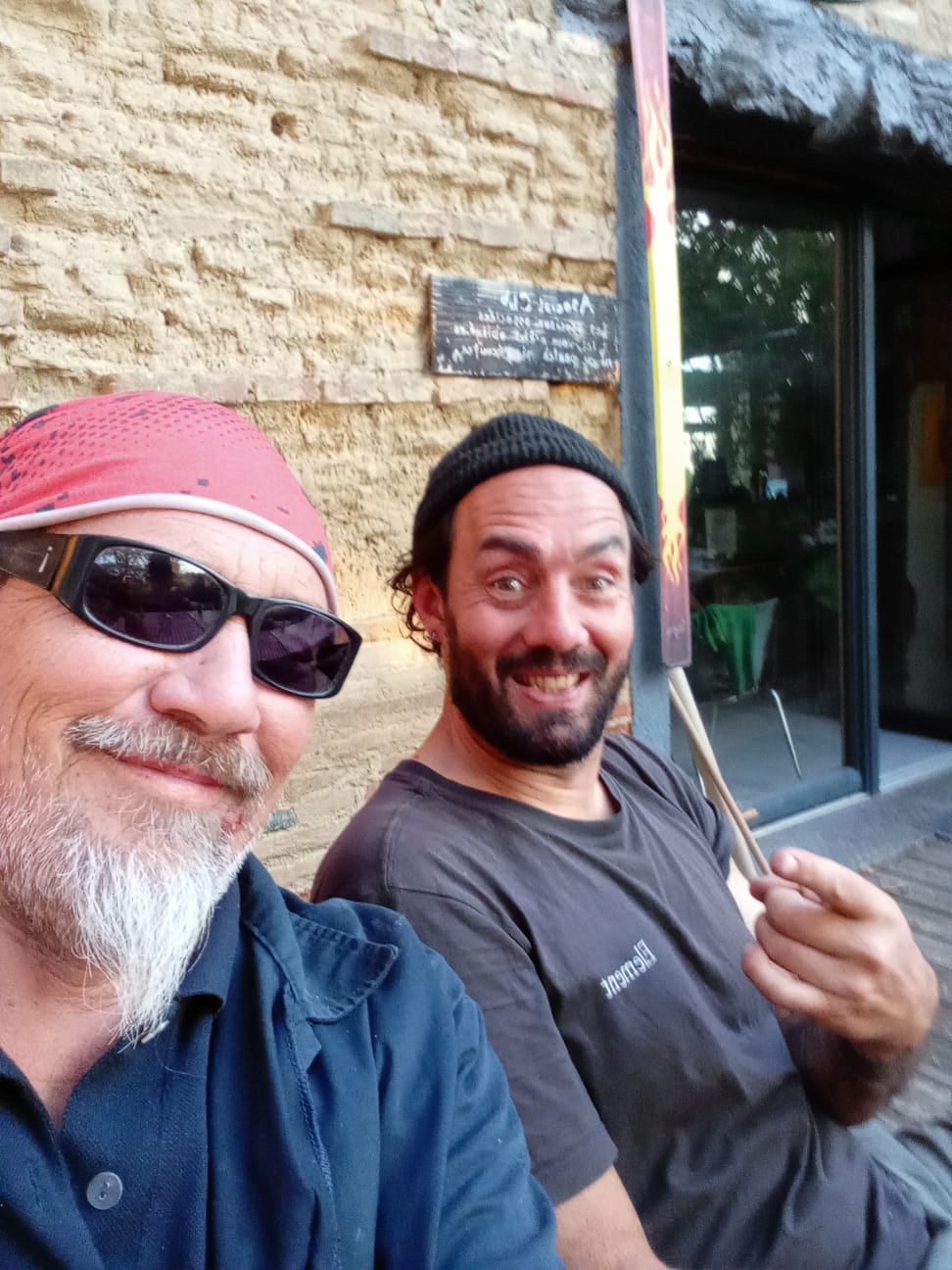
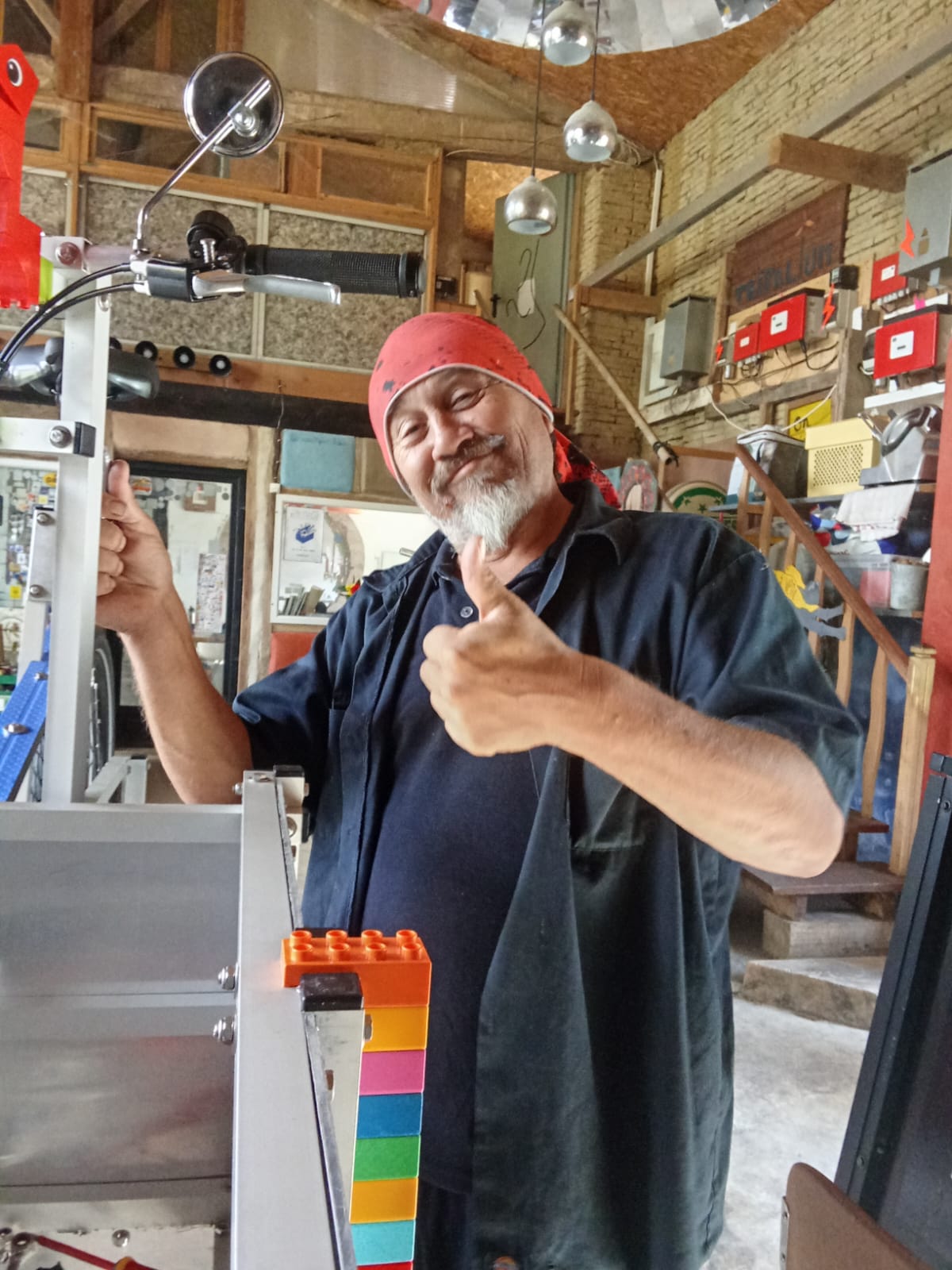
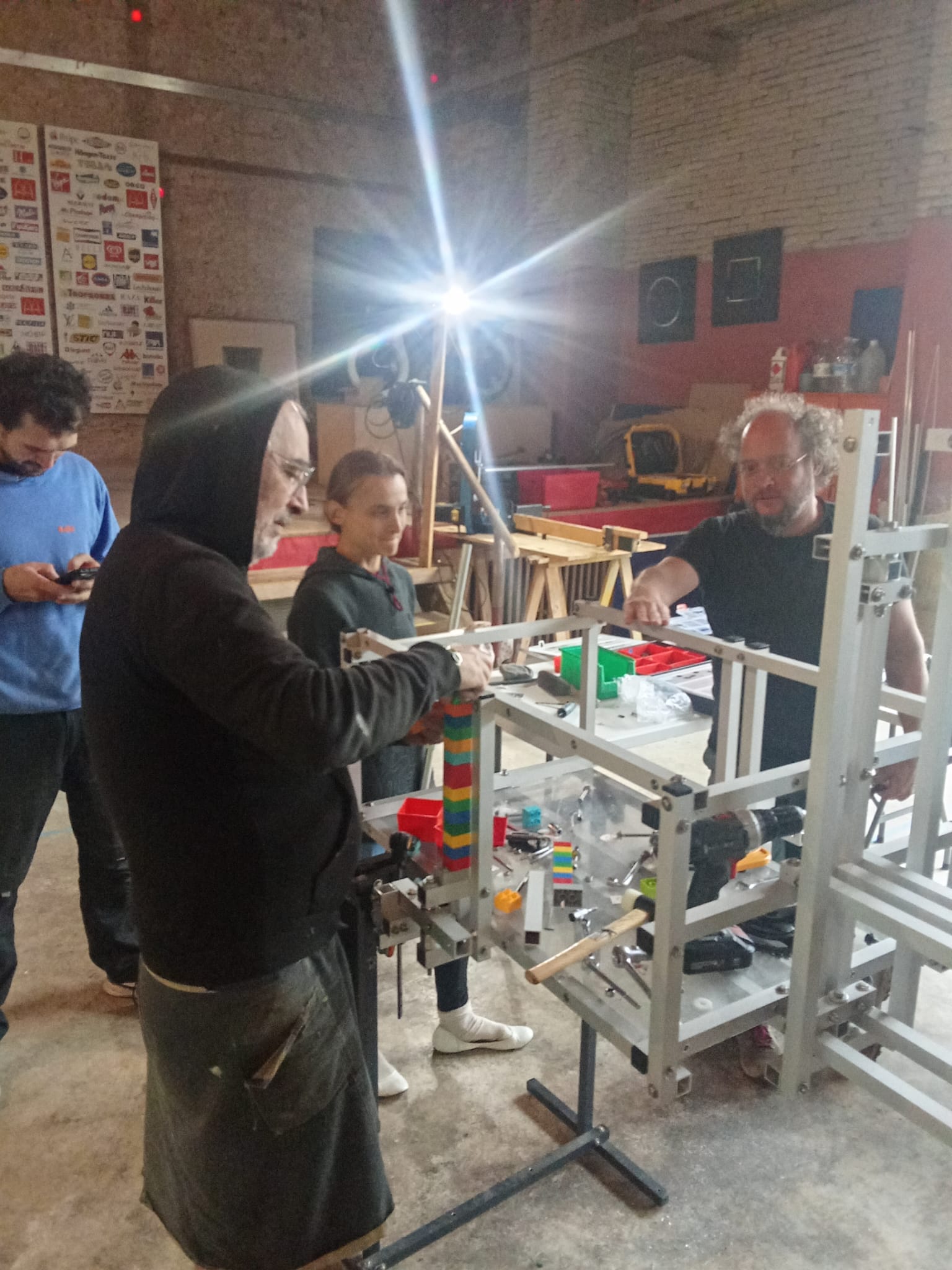
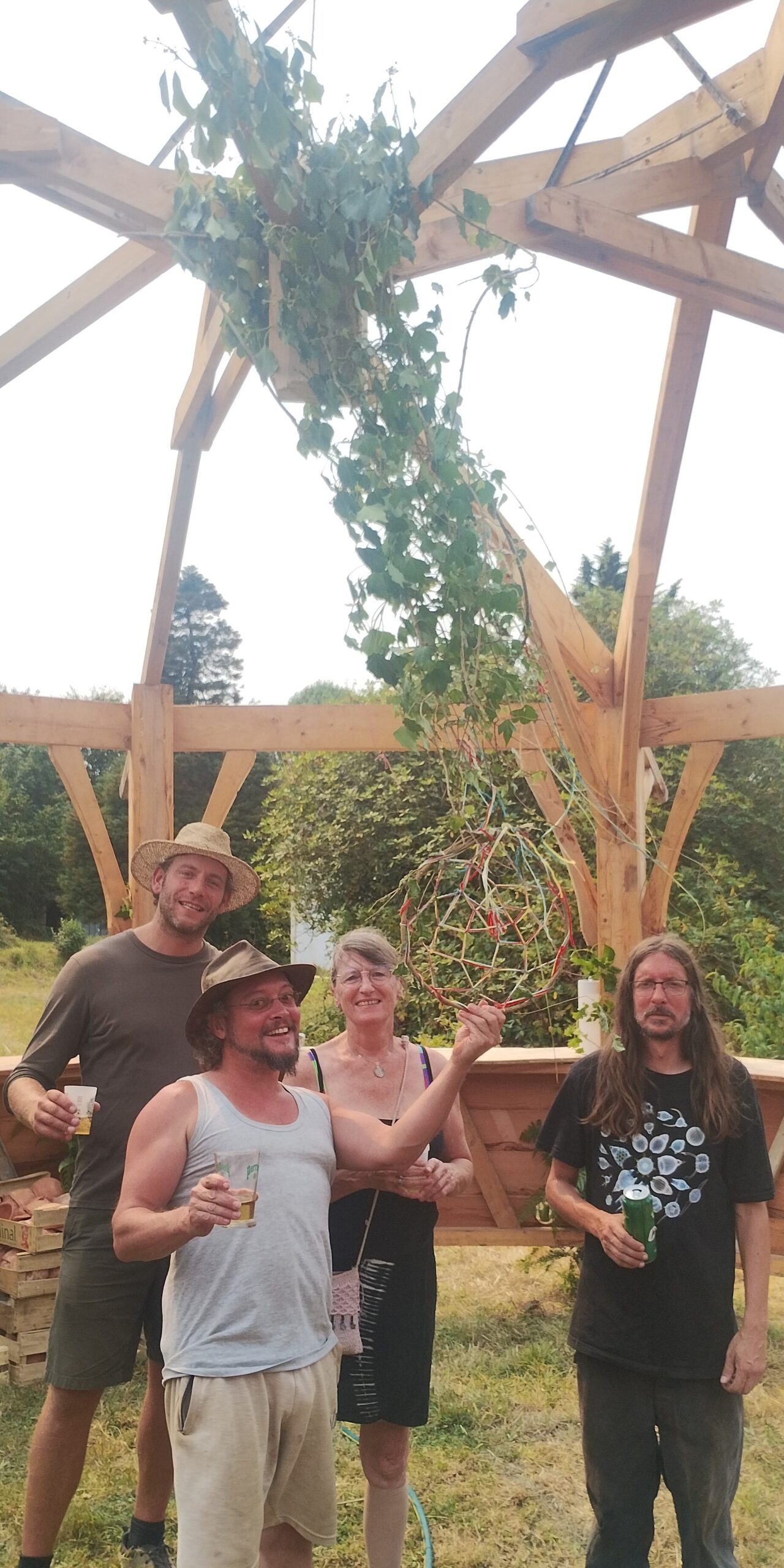
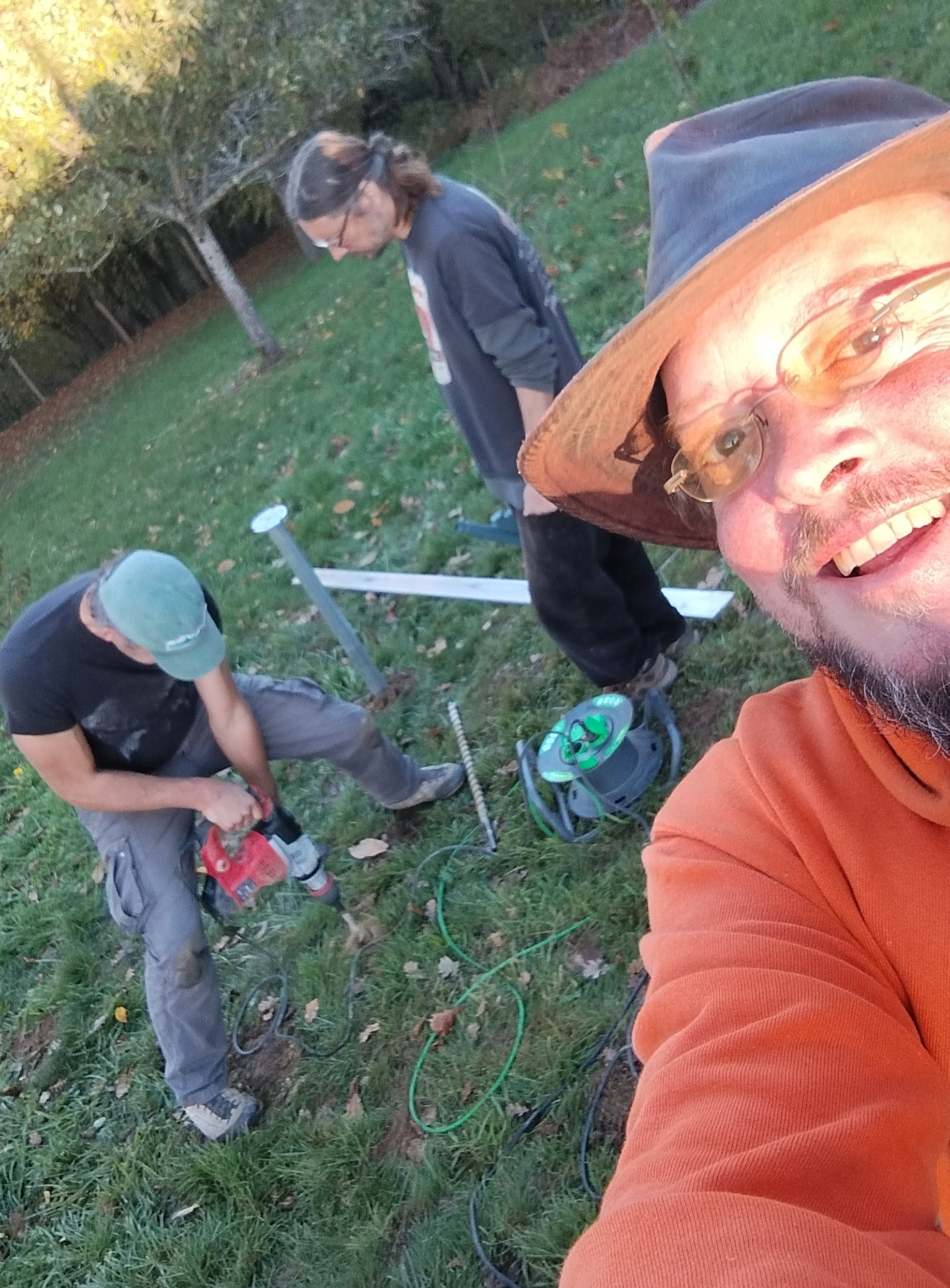
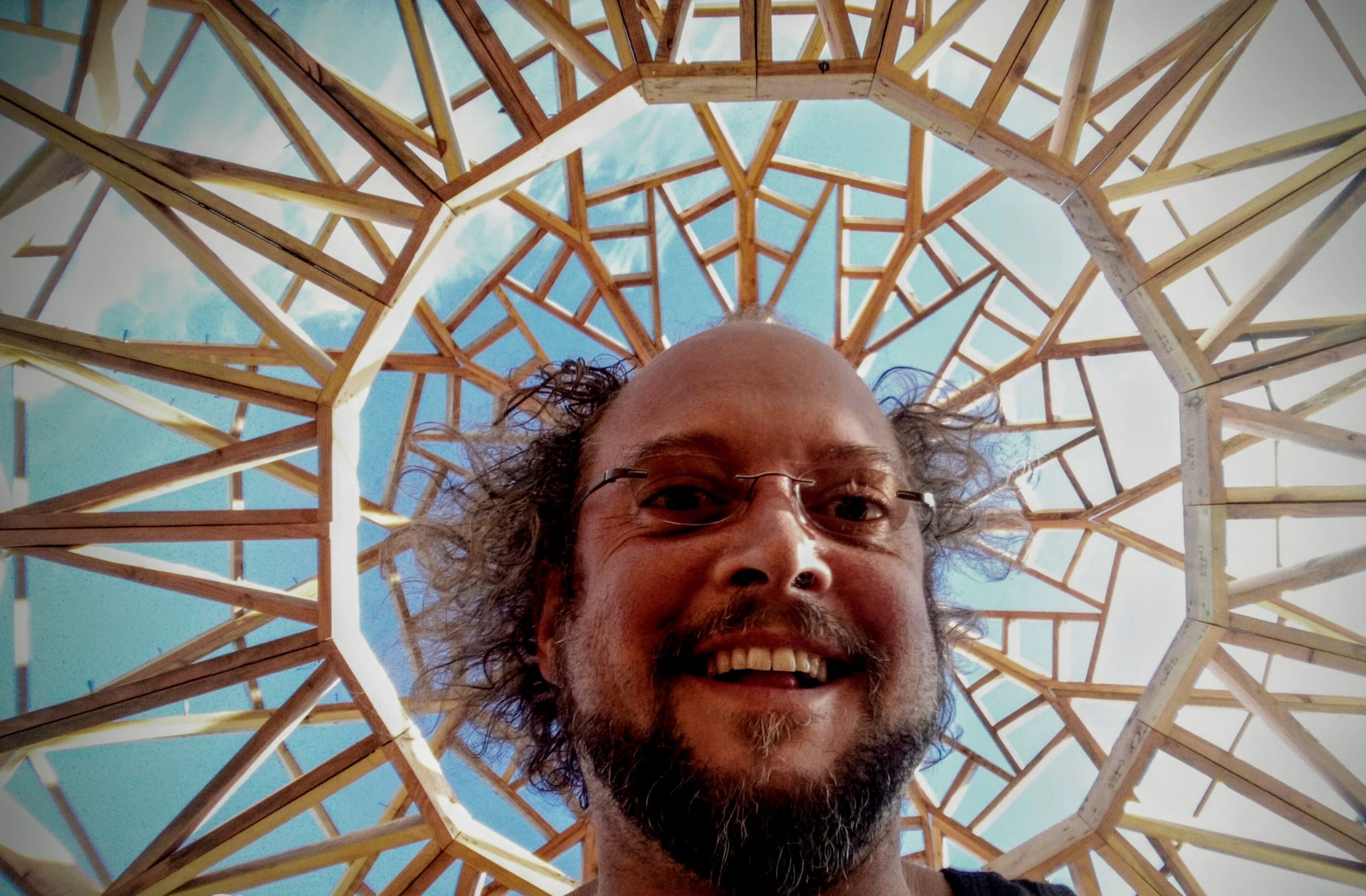
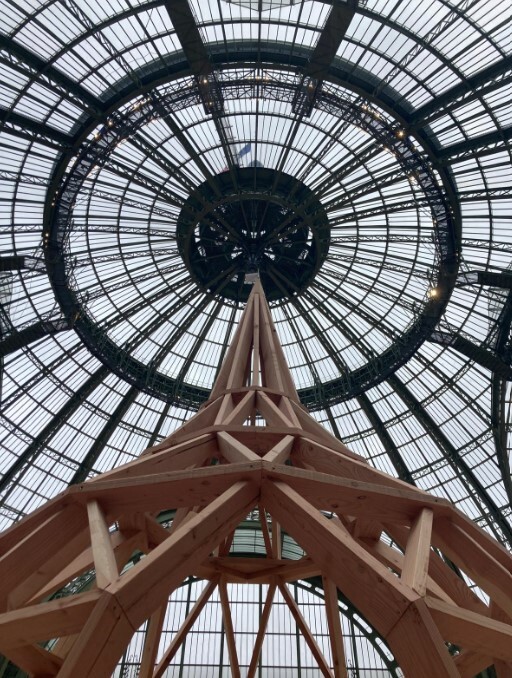
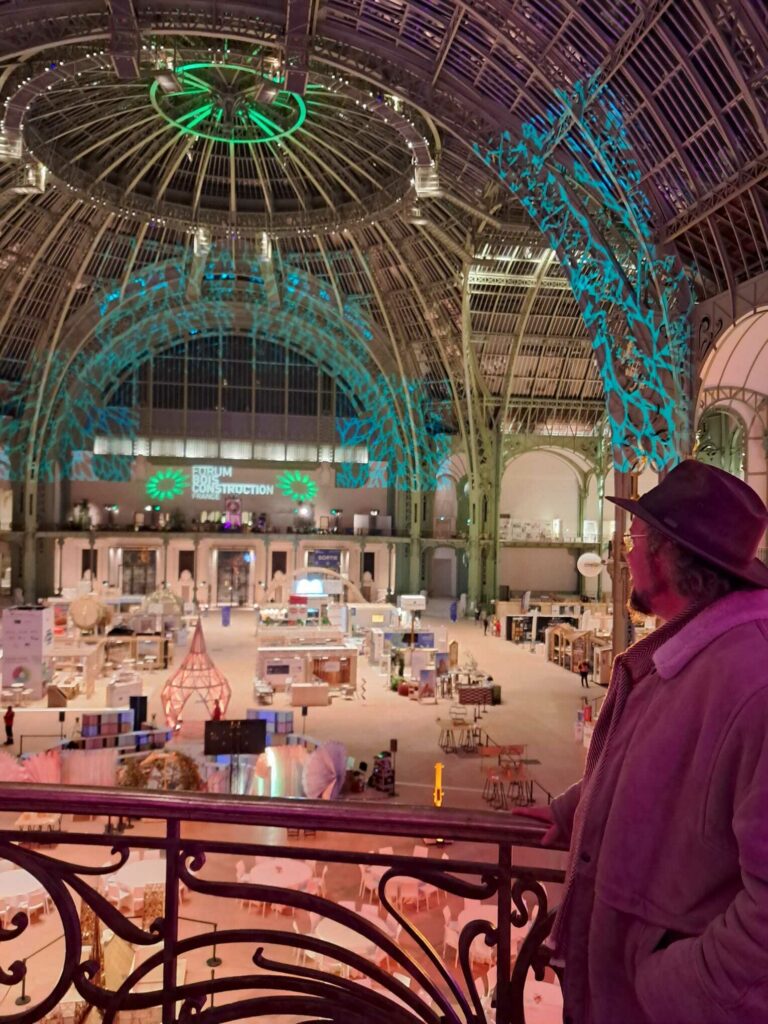
– Michael Feneux (lead Artist): Lead artist for « The tear of Midas » 2026, Art builder with international expérience (France, Luxembourg, export in caucasus, built art structures in 44°C heat in India, exhibition of his work at the Grand Palais, the world’s largest rammed earth dome of Satprem Maïni… )
– Arthur Mamou-Mani (Advisor): Architect, lead artist of Galaxia 2018, Catharsis 2020
– Benoit « CONDOR » Bergeret: Benoit “[B3]CONDOR” Bergeret, Temples 2016 (build crew), 2017 (build co-lead), 2018 (build co-lead, temple crew camp lead), The Folly 2019 (build crew & camp lead), Temple 2024 (build crew)
– Isabelle Mas: régional contact for BM France
– Cécile Ravaux: Folly 2019 Team , co présidente of French burners et Crème Brulée
– Lîl: participated to Burning man in 2019, he is Mechanical Engineer, artist, maker, cyber Middle Age concept
– Duncan Brefort: Burner since 2011. DPW / Resto since 2017 (Artery Construction Crew). He participated to Death Guild Thunderdome since 2019. And the Temple Buliders Guild 2025.
– Lucile Carnet, is a burner builder who has participated in several works at Burning Man, (Temple/Folly builder)
– Sylvain Carresse, is a great french carpenter and a trusted collaborator who regularly build with Michaël Feneux in his construction projects. He will be a key member of the crew.
– Yogan Bredel, is a famous french art carpenter, having participated in the reconstruction of Notre Dame, traveled the world to write his book on cabins, and is the founder of the Cabana wood chip carpentry group.
– Menthé Kasmi: A carpenter with a passion for woodworking tools and axe hewing. He has also been involved in prestigious projects such as squaring the timbers for the framework of Notre Dame de Paris.
-Bryan Lemmel, American carpenter and zome builder, member of the festizome community
– Tom Shenton, is a British-french carpenter who discovered zomes from Michael Feneux, and who is used to building around the world. Member of the festizome community
– Luke, a member of the Zometool community in the United States
– Georges Amir Kunzler, Watsu and Yoga teacher. Zome builder, and member of the festizome community
Its aura invites us to envision new models of living—rooted in cooperation, creativity, and the power to re-enchant our world.
Standing before a 40-foot wooden tear, we are moved by what collective effort and compassionate collaboration can create. The Midas Tear was born from a shared desire to craft a symbol that offers Burners—and the world—a message of optimism, unity, and hope for the future.
This original work of art calls us to enter the Agora of the Future—a space for connection, reflection, and transformation. As we emerge, we are changed: nourished by the light of truth, and inspired by a renewed sense of shared sacredness.
This monumental landmark invites gathering, contemplation, and communion—a reference point where Burners unite in shared wonder.
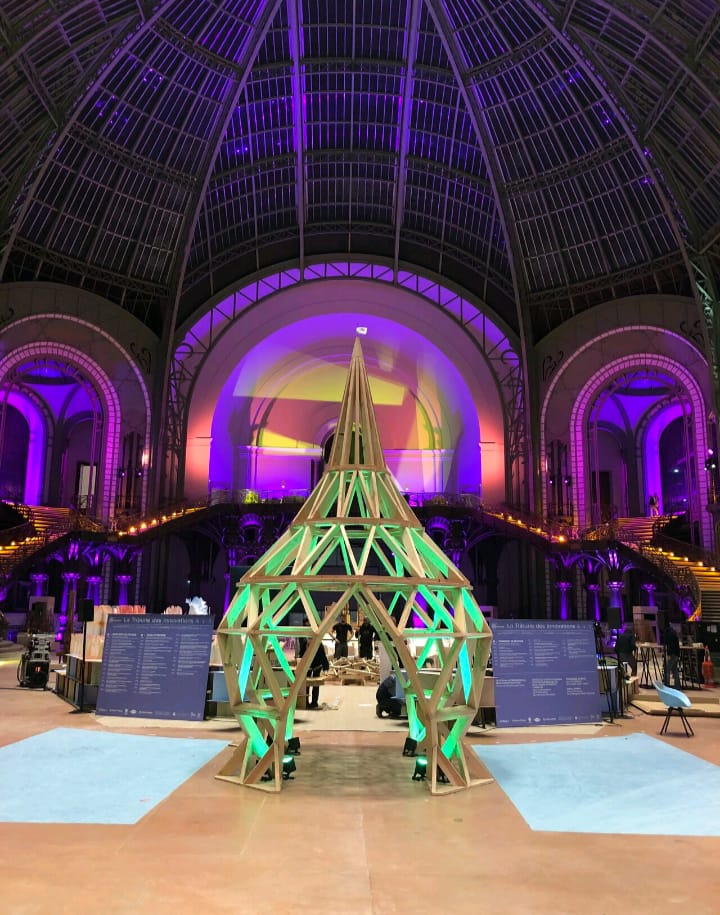
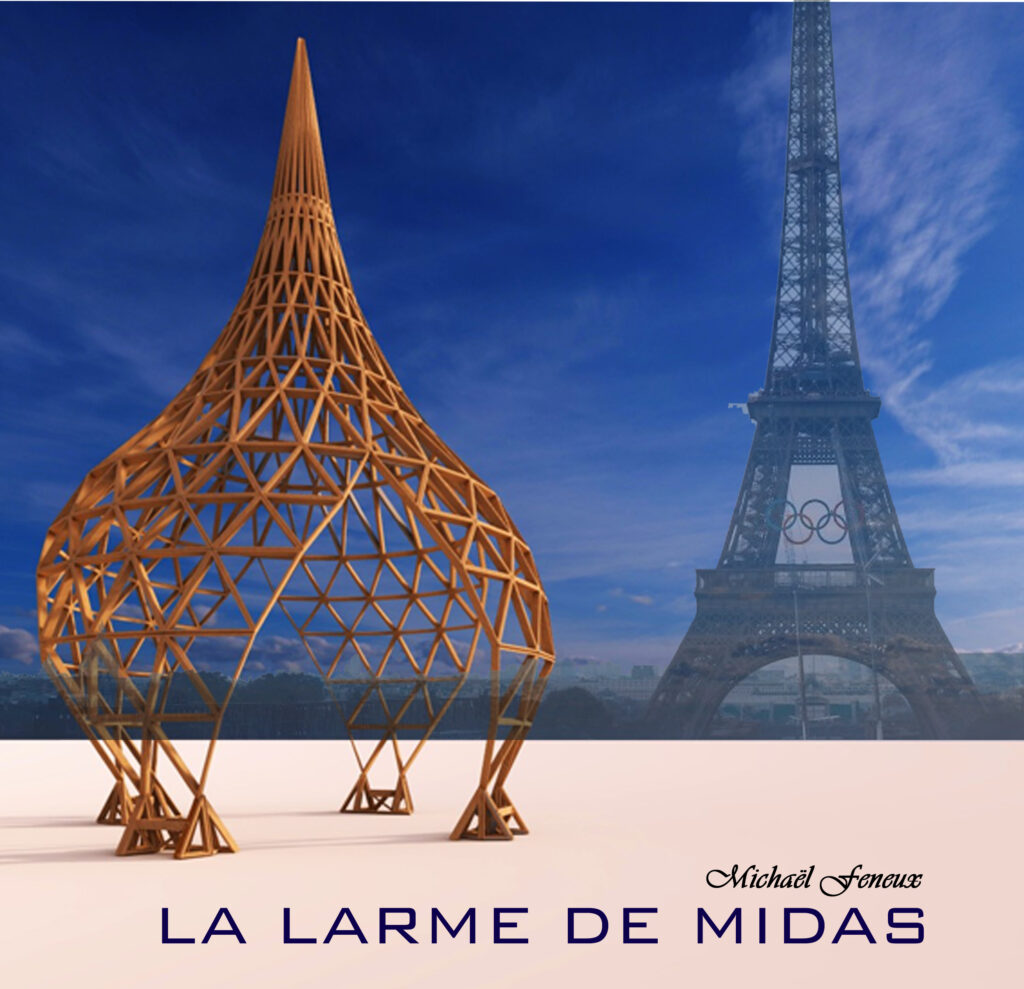
Shaped like a drop, The Tear of Midas finds its deepest meaning in the heart of the desert, where it rests like a jewel within the vast expanse.
Crafted in golden proportions, this artwork stands as both a symbol of water and the embodiment of human emotion. It brings a quiet drama to its surroundings—balancing the rigor and harmony of its design with the vitality and depth of the feelings it stirs.
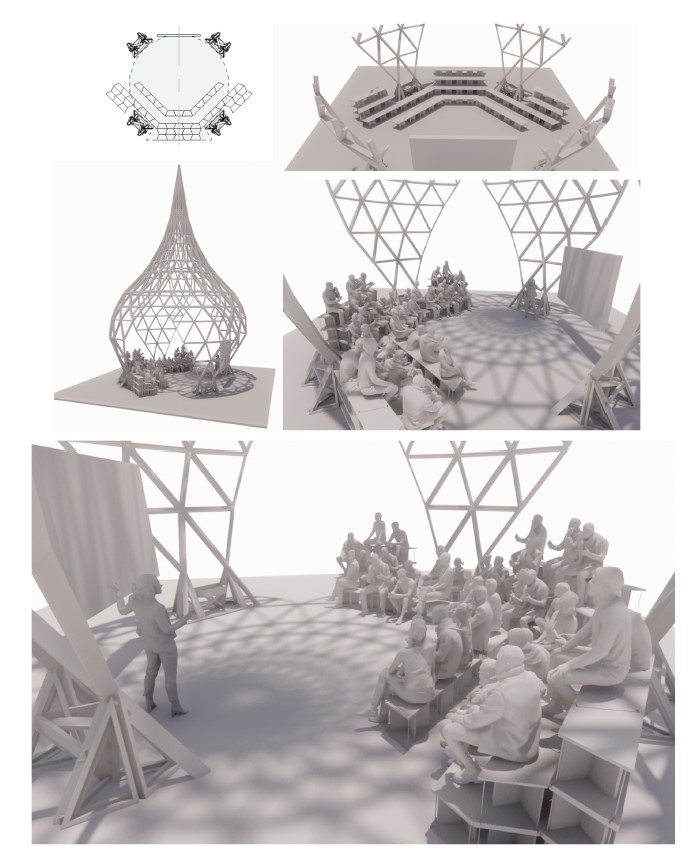
The Midas Tear is an open agora—a space for reflection, connection, and communion with nature.
Visitors can meditate, join speaking circles, or simply sit inside this giant wooden droplet to feel its energy. From sunset to dawn, it pulses with acoustic music and drums, while LED lighting and video mapping transform it into a glowing beacon—a lighthouse in the desert.
Its ever-changing shadows, cast by the sun or illuminated at night, invite wonder, contemplation, and the memory of a unique, extraordinary moment.
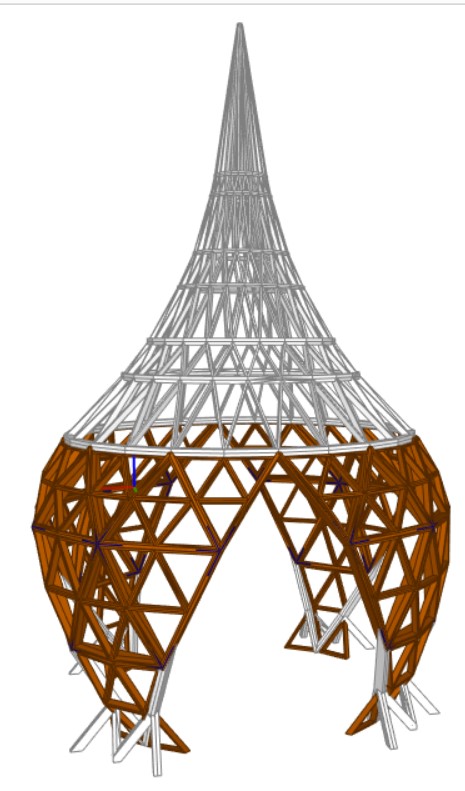
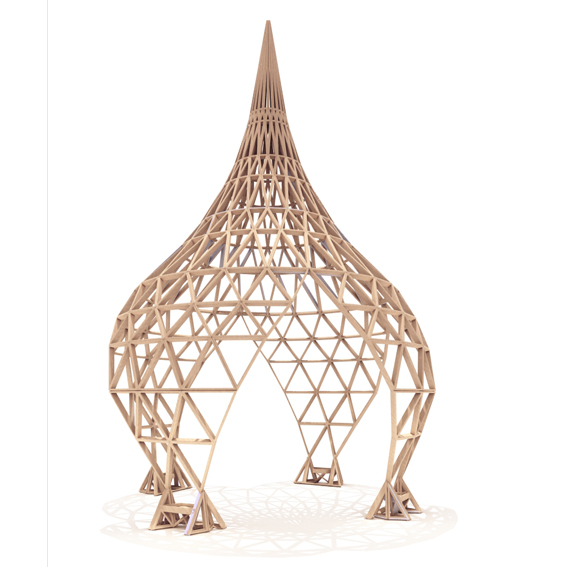
The soaring, self-supporting form of the structure, the harmony of its curves, and the way its shadows stretch across the desert make it a striking work of fine art, perfectly suited to the Burning Man landscape.
This wooden symbol of ecology and the preciousness of nature shines like a drop of gold in the desert. Visitors can experience the artwork as an open gathering space. Its cardinal points align with four grand temple doors, each 16 feet tall, inviting people to explore, gather, and connect.
Circular at its equator, the structure evokes a small wooden Eiffel Tower or a cathedral bell tower—at once modern, sacred, and mythological. Its spire rises as a 24-foot cosmo-telluric chimney, forging a powerful connection between earth and sky.
PHILOSOPHY
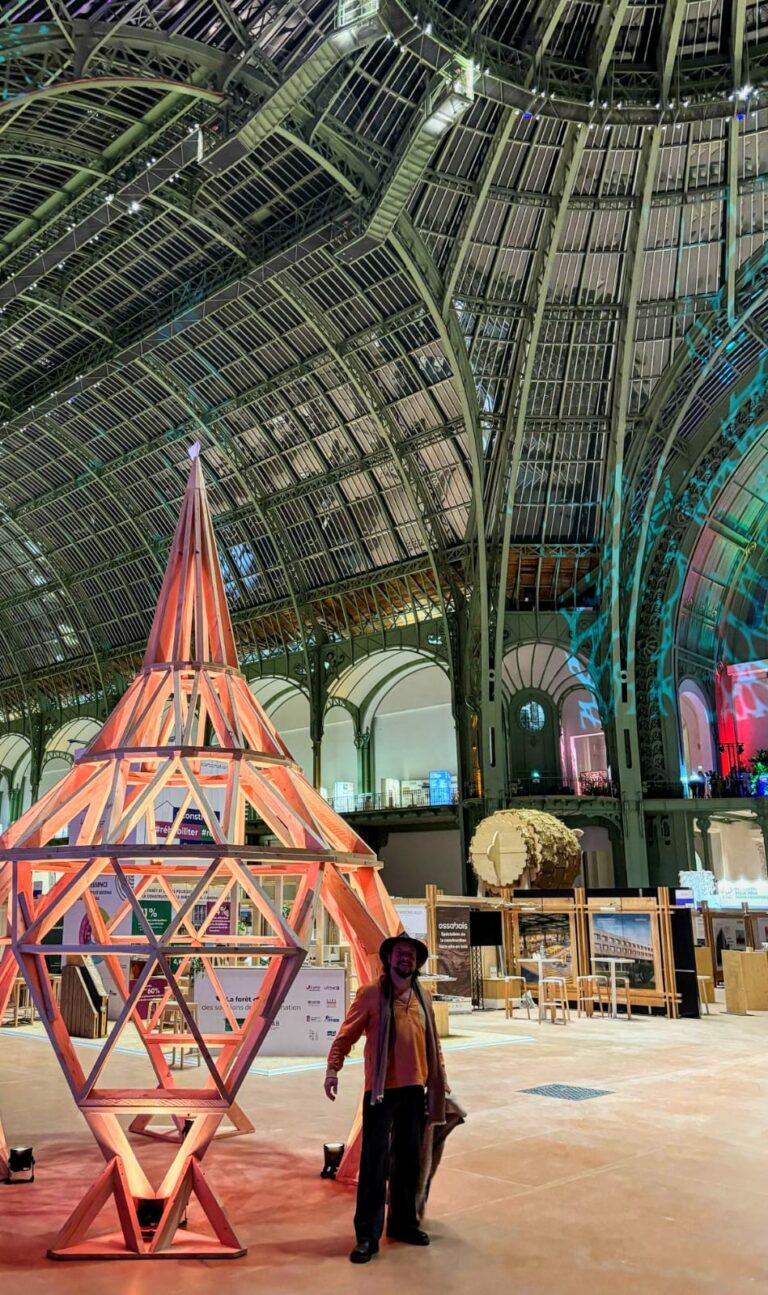
The Tear of Midas embodies this paradox, standing at the intersection of civilization’s excess and the joy of simply contemplating life. Midas’s wish—that everything he touched would turn to gold—became a curse: all he loved deteriorated, and despair took hold. His final golden tear marked a moment of clarity: true wealth lies not in riches, but in life itself, in love, in beauty, and in the contemplation of all living things.
Carved from living wood, the Tear serves as both a warning and an invitation: to cherish nature before it is too late, to free ourselves from the scourge of endless exploitation. In an age of excess, it calls us to reflect on the challenges of the 21st century—ecological transition, responsible action, and harmonious coexistence with the natural world.
What is truly precious? What gives life meaning?
The Tear of Midas reminds us that harmony with nature is the path to awakening.
The myth tells us …
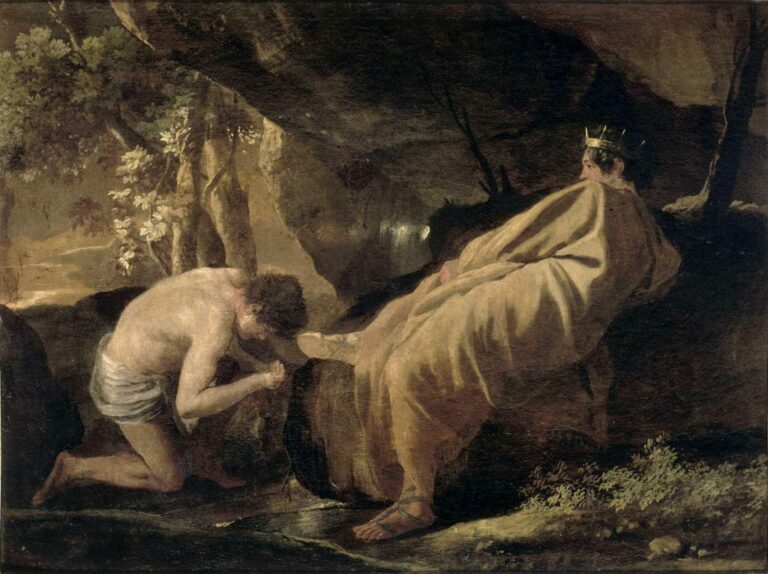
.The original myth of King Midas and Dionysus, god of ecstasy, explores the pursuit of happiness while warning against greed and the blind accumulation of wealth. It challenges us to seek what is truly essential and to confront the despair of obsession.
King Midas once took Dionysus’ father, who was wandering in a drunken state, into his kingdom. In gratitude, Dionysus offered to grant Midas any wish.
Midas wished that everything he touched would turn to gold. At first, he gained immense wealth, but soon his gift became a curse: everything he touched died, stripping him of all happiness. Unable to eat, drink, or love, he was overwhelmed with despair and begged for the gift to be taken away.
To rid himself of this torment, Midas bathed, returning to a life of balance and normalcy.
We are living through a historical era, we are shifting paradigms, and this symbolic parable questions us about the challenges of the 21st century, the ecological transition, and how we can act.
We must become aware of the role and effectiveness of nature, take care of it, and keep it close to us, as if it were made of gold… Nature is so precious that it determines our future on the planet.
How can we protect landscapes and enhance living things on an urban scale?
This call for symbiosis is the key to awakening.